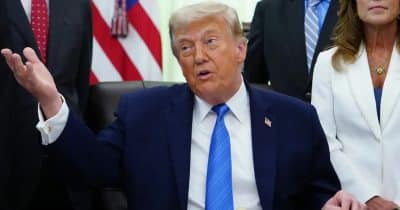
Former President Donald Trump said Iran’s ability to draw from a $300 billion fund will depend on how the country acts, injecting a new condition into the long-running standoff over Tehran’s regional influence and nuclear program.
The statement
Trump did not specify which fund he was referring to or elaborate on what specific behaviors would unlock or block access. The remark, made in a brief public appearance, was his first direct comment on the fund’s status since leaving office. It left open whether the money is held by a foreign central bank, frozen under sanctions, or part of a broader escrow arrangement.
Iran has long sought to repatriate or use assets abroad that have been frozen by international sanctions, particularly after the U.S. withdrew from the 2015 nuclear deal. Analysts estimate that Tehran’s accessible foreign reserves amount to tens of billions of dollars, though the exact figure and location of the $300 billion cited by Trump have not been independently confirmed.
What the condition means
By tying the fund to Iran’s behavior, Trump appears to be signaling that any future access would come with a political price. The statement aligns with his administration’s maximum-pressure campaign, which aimed to cut off Iranian oil revenue and curb its missile program and support for proxies. Without an explicit list of acceptable or unacceptable actions, the remark remains a broad threat rather than a concrete policy shift.
Reactions so far
Iranian officials have not publicly responded to Trump’s statement. The current Biden administration has not commented on the former president’s remarks, and it is unclear whether Washington has any direct control over the fund Trump mentioned. The ambiguity leaves room for speculation about whether the money is held in escrow accounts, such as those used for humanitarian trade, or in accounts linked to oil sales that have been subject to sanctions waivers.
The remark comes as Iran continues to enrich uranium at levels close to weapons-grade and as negotiations over a new nuclear accord remain stalled. Trump’s condition adds another layer of uncertainty to the already tangled diplomatic landscape.