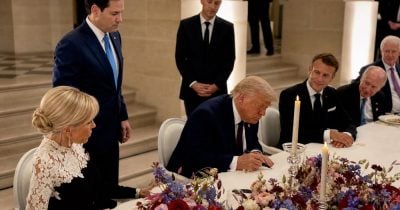
President Donald Trump has signed a preliminary agreement with Iran, administration officials confirmed Tuesday. The deal comes with a major financial commitment: Gulf states will fund $300 billion in reconstruction efforts across the region.
What the preliminary deal covers
The agreement is described as an initial framework. Neither side has released full terms, but the White House said it addresses curbs on Iran's nuclear activities and ballistic missile programs. In exchange, Washington will begin lifting certain economic sanctions. The $300 billion reconstruction package, financed by Saudi Arabia, the United Arab Emirates, Qatar, and Kuwait, is meant to rebuild infrastructure in Iran and neighboring countries affected by years of conflict.
That money won't flow all at once. Officials said the funds will be released in tranches tied to compliance benchmarks over the next five years. The deal doesn't require congressional approval, though some lawmakers on both sides have already signaled they'll push for oversight hearings.
Why the Gulf states are bankrolling it
The six members of the Gulf Cooperation Council agreed to the funding after months of back-channel talks brokered by the Trump administration. For Gulf leaders, the calculation is straightforward: a stabilized Iran reduces the risk of proxy wars, missile strikes on oil facilities, and disruptions to shipping lanes in the Strait of Hormuz. The reconstruction money also buys them influence in post-sanctions Iran's economy, particularly in energy and infrastructure contracts.
Impact on global energy markets
Oil traders reacted cautiously. Brent crude futures dipped 2% on the news before recovering slightly. Analysts at the International Energy Agency have long estimated that fully restored Iranian exports could add 1.5 million barrels per day to global supply. The preliminary deal doesn't lift all sanctions immediately, but it opens the door for Iran to ramp up production within months. That could mean lower gasoline prices for consumers worldwide, though the effect won't be instant.
Natural gas markets are also watching. Iran sits on the world's second-largest gas reserves. If the deal holds, international energy companies could eventually develop those fields, easing supply constraints in Europe and Asia.
What this means for digital assets
The agreement may accelerate cryptocurrency adoption in the Middle East. Iran has already used bitcoin to bypass sanctions in recent years, and the Gulf states have been experimenting with central bank digital currencies. A reduction in regional tensions typically encourages cross-border investment and trade, which could push more transactions onto blockchain-based systems. The $300 billion reconstruction fund itself might be managed partly through digital ledgers to ensure transparency, though no formal decision has been made.
Bitcoin's price edged up 1.5% after the announcement, but traders say the real shift will come if the deal leads to a broader detente between Iran and the West.
Unresolved questions and next steps
The preliminary agreement sets a 90-day deadline for negotiators to finalize a comprehensive deal. If they miss it, the current framework lapses and sanctions snap back. That leaves a lot riding on the next three months—not just for Iran's economy, but for Gulf investments, global oil markets, and the future of digital finance in the region. Congressional hearings are expected to begin next week.