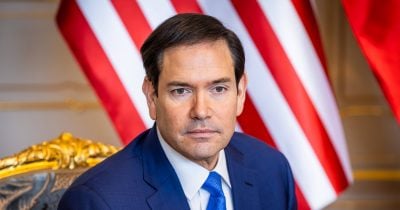
Donald Trump told reporters Wednesday that he made no commitment to Xi Jinping regarding Taiwan, and declined to answer whether the US would defend the island. The former president said Xi asked directly—and Trump responded, “I don’t talk about that.” The statement removes an immediate escalation trigger, but keeps Taiwan a wildcard in US-China relations, a dynamic some crypto investors interpret as a long-term bullish catalyst for Bitcoin.
The exchange
Trump was asked about his conversation with Xi during a campaign event. He said the Chinese leader posed the Taiwan question point-blank. Trump’s answer—“I don’t talk about that”—means no commitment either way. The White House did not comment. Beijing has not yet formally responded, but state media outlets have noted the ambiguity.
📊 Market Data Snapshot
Why crypto markets aren't panicking
Bitcoin is trading around $77,500, down about 4.7% over the past week, with the Fear & Greed Index stuck at 29 (Fear). That’s largely pre-existing macro jitters—CPI data and Fed minutes are on deck. The Taiwan statement alone lacks a clear market catalyst: no tariffs, no sanctions, no military drills. Crypto has been decoupling from traditional geopolitical shocks lately. So the immediate reaction is muted.
Still, the ambiguity matters. The 2022 Pelosi visit to Taiwan triggered a brief crypto dip of 5-10%, followed by a recovery within 30 days. Traders are watching for any Chinese military response. If Beijing announces exercises near the island, BTC could test $74,000 support. If not, a relief bounce to $79,000 is possible.
The contrarian read: Eroding US credibility
Mainstream coverage sees Trump’s refusal to commit as escalating risk—driving capital toward gold or the dollar. The contrarian take flips that. A US that won’t commit to defending a key ally weakens trust in American security guarantees and, by extension, the dollar’s reserve status. Bitcoin, as a non-sovereign store of value, benefits from any fraying of the US-led global order.
That’s not a short-term trade; it’s a structural argument. But it matches what’s happening in Asia: stablecoin volumes have surged during trade tensions, and Chinese capital flight into BTC via DEXs and P2P platforms could accelerate if elites see US reliability fading. The market is pricing fear now, but the long-term narrative is quietly bullish for Bitcoin adoption as a neutral reserve asset.
What to watch next
Beijing’s official response is the immediate trigger. If Xi downplays the exchange, expect status quo. If China announces military drills near Taiwan, expect a short-term dip. Either way, the next concrete event is Trump’s scheduled rally in Minnesota on Saturday, where he may face more questions on Taiwan. Traders should also watch for any follow-up from Taipei—the Taiwanese government has not yet commented.