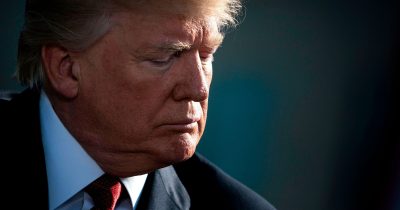
President Donald Trump threatened this week to withdraw 5,000 U.S. troops from Vilseck, Germany, a town whose economy rests almost entirely on the American military presence. Residents aren’t just worried about losing neighbors and friends — they’re staring down the collapse of their main income source. In a crypto market already deep in fear (Fear & Greed Index at 28), the localized shock could create an unexpected test case for grassroots blockchain adoption.
Why Vilseck is worried
Vilseck, a small Bavarian town of about 6,000 people, has hosted U.S. soldiers and their families for decades. The base pumps millions of euros into local businesses — bars, grocery stores, housing rentals, repair shops. Many residents have built friendships with American personnel over generations. Trump’s threat to yank the troops — a move still in the announcement stage with no set timeline — has left the community scrambling to imagine a future without the base. Local officials haven’t commented publicly, but the anxiety is palpable.
📊 Market Data Snapshot
The crypto angle most miss
Mainstream coverage will focus on the human toll and diplomatic fallout. But for crypto reporters, this is a second-order story worth watching. If Vilseck’s economy actually takes a hit — lost income, empty storefronts, falling property values — the town could become a living lab for hyperlocal blockchain solutions. Think community tokens for mutual aid, local tourism incentives, or even a town-branded stablecoin to keep spending circulating locally. It sounds far-fetched until you remember that towns from rural Japan to small Swiss municipalities have already dabbled in similar experiments.
The logic is simple: when the dollar-denominated cash flow from U.S. bases dries up, towns need a way to rebuild local liquidity without waiting for federal help. Blockchain-based tokens can issue trust and value fast, with minimal institutional approval. Vilseck isn’t there yet, but the threat alone might push local leaders to explore alternatives — and if it works, other base-hosting communities in Germany, Japan, or South Korea could follow.
What happens to the broader market
Don’t expect Bitcoin to move on 5,000 troops. That’s a fraction of U.S. overseas personnel. But the event feeds a larger narrative: dollar-backed security guarantees are being renegotiated, and that slowly erodes the Petrodollar system’s foundations. Institutional investors who track these geopolitical shifts may quietly increase Bitcoin allocations as a hedge. The immediate price action is likely consolidation between $74,200 and $75,800, per our market analysis, with volume dropping as retail sellers exhaust themselves.
The next concrete date to watch is any official German response — a statement from the Bundestag or a counterproposal from Berlin. If Germany begins floating defense contracts in euros instead of dollars, de-dollarization chatter will spike, and crypto could catch a bid. For now, Vilseck waits, and the blockchain world should keep an eye on a small Bavarian town that might just invent a new use case for tokens nobody saw coming.