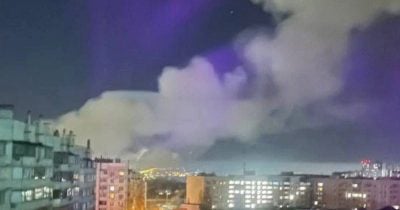
The United States launched airstrikes that killed Iran's Supreme Leader, Ayatollah Ali Khamenei, in a dramatic escalation of hostilities between the two nations. The attack, confirmed by multiple sources, has immediately ratcheted up tensions across the Middle East, raising fears of a wider conflict that could derail any remaining diplomatic efforts.
The Strike That Changed the Region
The US operation targeted and killed Khamenei, the highest authority in Iran's political and religious hierarchy. Details of the strike remain sparse, but its impact is already reverberating through capitals worldwide. The assassination of a head of state by a foreign power is a rare and provocative act, one that analysts say could fundamentally alter the balance of power in the region.
In Iran, the loss of Khamenei leaves a power vacuum at a time of heightened internal and external pressures. The country's leadership structure, centered on the Supreme Leader, now faces an uncertain transition. Hardliners may push for immediate retaliation, while others might call for restraint. The streets of Tehran saw mixed reactions, with some mourning and others expressing defiance.
Diplomatic Paths Closed
The airstrikes are likely to hinder diplomatic resolutions to ongoing disputes, including Iran's nuclear program and its regional influence. Talks that were already fragile now appear all but dead. The US action signals a preference for military force over negotiation, a stance that other world powers have criticized. The European Union and the United Nations have called for de-escalation, but their appeals face an uphill battle given the gravity of the strike.
Regional stability, already precarious due to conflicts in Gaza, Yemen, and Syria, now faces a new shock. Iran's proxies, including Hezbollah in Lebanon and various militias in Iraq, may respond with attacks on US and allied targets. The risk of a broader war involving multiple nations has grown significantly.
Global Geopolitical Fallout
The killing of Khamenei impacts global geopolitical dynamics beyond the Middle East. Oil markets, already volatile, could see sharp price spikes as traders price in supply disruptions from the Strait of Hormuz. Major economies, including China and Russia, have expressed concern and called for calm. The US has placed its military forces on higher alert across the region, while allies like Israel and Saudi Arabia are assessing their own security postures.
The international community now watches for Iran's next move. Retaliation could come in various forms — cyberattacks, proxy strikes, or direct military action. The US has warned it will respond forcefully to any reprisals, setting the stage for a possible cycle of escalation that neither side may be able to control.
The question that hangs over the region now is whether any diplomatic channel can be reopened before further bloodshed. With the Supreme Leader gone and tensions at a boiling point, the path forward remains shrouded in uncertainty.