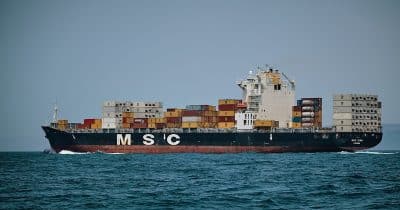
The United States and Iran have signed a memorandum guaranteeing toll-free and safe passage through the Strait of Hormuz for the next 60 days. The agreement, announced without a formal ceremony, aims to ease tensions in one of the world’s most critical shipping chokepoints. Investors are now assessing the potential impact on oil markets and regional stability.
The Memorandum’s Terms
The deal is limited to a 60-day window. During that period, vessels transiting the strait will not be charged tolls—a long-standing Iranian demand—and both sides have committed to avoiding confrontations in the waterway. The memorandum does not address broader disputes, including Iran’s nuclear program or U.S. sanctions. It is a narrowly focused, temporary measure.
Neither government has detailed the enforcement mechanism. The U.S. Navy’s Fifth Fleet, based in Bahrain, routinely patrols the area. Iran’s Islamic Revolutionary Guard Corps also maintains a presence. The 60-day clock started ticking immediately after signing, according to sources familiar with the matter.
Market Signals and Prediction Markets
On Polymarket, a decentralized prediction platform, the probability that something—an unspecified outcome tied to the deal—will happen stands at 7.5%. That low figure suggests traders are skeptical the memorandum will lead to a lasting breakthrough. The platform does not disclose what exactly the “Yes” outcome represents, but it appears tied to the broader US-Iran relationship.
Oil prices have been volatile in recent weeks. The Strait of Hormuz handles roughly one-fifth of the world’s petroleum. Any disruption there can send prices spiking. For now, the deal removes that immediate risk for two months, but investors remain cautious. They are watching to see whether the memorandum is extended or if it collapses.
OPEC’s Rebuttal to Supply Glut Fears
Separately, OPEC Secretary-General Haitham al-Ghais pushed back against the International Energy Agency’s forecast of a global oil supply glut by 2027. Al-Ghais argued that demand growth will outpace the agency’s projections. His comments came just as the Strait deal was announced, adding another layer of uncertainty for energy markets.
The IEA had warned that investments in new production could outstrip consumption, leading to oversupply. Al-Ghais rejected that view, saying OPEC sees “robust” demand for years to come. The tension between the two organizations is not new, but al-Ghais’s timing—coinciding with the US-Iran memorandum—underscores how geopolitics and fundamentals are colliding.
For now, the 60-day window is the only concrete timeline. If the memorandum holds, it could build trust for broader talks. If it falters, the region returns to its default state of brinksmanship. The next test comes at the 30-day mark, when both sides are expected to review progress. No date for a review has been publicly set.