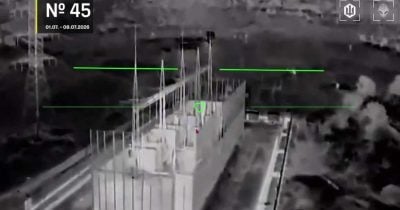
A US Army Apache helicopter went down near the Strait of Hormuz on Monday, and two crew members were pulled from the water by an uncrewed vessel — a sea drone. US officials confirmed the rescue to CBS News. The incident itself was resolved without casualties, but the method of rescue has drawn attention from defense analysts and tech investors alike.
What happened Monday
The Apache crashed in one of the world’s most strategically vital shipping lanes. Within hours, an autonomous surface vessel — operated remotely or semi-independently — reached the crew and brought them to safety. The exact cause of the crash hasn’t been disclosed, and the military has not released details about the drone’s design or operator.
📊 Market Data Snapshot
Why the drone matters
Uncrewed vessels aren’t new, but real-time rescues under pressure are rare. The successful operation demonstrates that autonomous systems can function reliably in crisis scenarios, even in hostile or high-traffic environments like the Strait of Hormuz. For the Pentagon, which has poured hundreds of millions into uncrewed maritime programs in recent years, this is a real-world validation of a long-running bet.
The same coordination principles that let a sea drone execute a rescue — secure communication, tamper-proof command chains, real-time data sharing — are at the heart of blockchain-based logistics networks. While no specific protocol or token was involved, the incident reinforces the case for decentralized systems that can manage autonomous fleets without a single point of failure. For crypto investors, the narrative shift is subtle but real: military adoption of autonomous tools lowers the 'autonomy risk' premium that has kept many institutional players on the sidelines. That could eventually benefit infrastructure tokens focused on supply chain and machine-to-machine payments — but for now, the market is still pricing in macro fear, not drone rescues.
The incident itself is over. What comes next is the quiet work of procurement officers and blockchain engineers who see Monday’s rescue as proof that autonomous systems are ready for prime time — and that the ledgers tracking them need to be just as resilient.