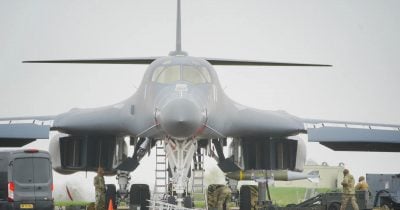
The United States is quietly moving more troops and hardware into the Middle East. The deployment comes as tensions with Iran continue to simmer — and a prediction market now gives a 28.5% chance of a full-scale invasion of Iran before 2027.
What the deployment means
The Pentagon hasn't announced exact numbers, but officials confirm additional naval assets and air-defense systems are being repositioned. The moves are described as defensive, meant to deter any Iranian retaliation for recent Israeli strikes on Iranian-linked targets in Syria. But the scale suggests planners are preparing for a wider conflict.
This isn't a repeat of the 2020 buildup that led to the Soleimani strike. That was a quick, targeted escalation. This time, the force posture looks more sustained — more like the kind of positioning you'd see ahead of a prolonged operation.
The prediction market's numbers
Polymarket, a decentralized prediction platform, currently shows a 28.5% probability that the US will invade Iran before January 1, 2027. That's up from around 10% earlier this year. The market has seen heavy trading in recent weeks, though it's unclear whether the buyers are informed insiders or just speculators.
Prediction markets aren't perfect. They can be manipulated, and they reflect sentiment as much as hard intelligence. Still, a 28.5% chance is not negligible. For context, the same market gave a 15% probability to the US invasion of Iraq in the months before it happened.
The immediate question is whether the military moves are meant to signal deterrence or to prepare for an actual strike. The administration has not asked Congress for a new Authorization for Use of Military Force, which would be required for a sustained ground campaign. But the White House has not ruled out acting under existing AUMFs from 2001 and 2002.
Iran has responded by accelerating its uranium enrichment and holding naval drills in the Strait of Hormuz. European diplomats are pushing for a new nuclear deal, but talks have stalled. The next few weeks will show whether the buildup is a bluff or a prelude.