Two US Navy destroyers transited the Strait of Hormuz on Wednesday after coming under fire from Iranian forces, marking the most direct military confrontation between the two countries in months. The incident threatens to destabilize global oil markets and raises the risk of a broader conflict in the region.
What happened in the strait
The destroyers, operating as part of a routine deployment, were drawing close to the narrow shipping lane when Iranian units opened fire. No US casualties were reported, and both vessels completed the crossing. The Pentagon has not released the names of the ships or the exact time of the engagement, but officials confirmed that the ships returned fire briefly before continuing their transit.
Iranian state media described the incident as a warning against what it called provocative American naval activity near its territorial waters. The US Navy maintains that the passage was conducted under international law in international waters.
Why the strait matters
The Strait of Hormuz is a chokepoint for about a fifth of the world's oil supply. Any sustained disruption there can send crude prices spiking and rattle global trade. The latest exchange comes after months of rising tensions, including Iran's accelerated uranium enrichment and US sanctions tightening. Traders are already watching for signs of supply constraints, and the risk of a miscalculation that shuts the waterway is now higher than it has been in years.
Analysts inside the White House are weighing options for a diplomatic off-ramp, but no formal talks have been scheduled. The US has reinforced its naval presence in the Persian Gulf over the past week.
Broader military implications
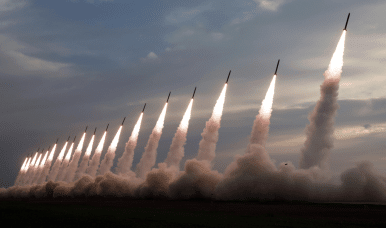
This is not the first time US and Iranian forces have exchanged fire in the region, but the direct targeting of a destroyer transit escalates the stakes. Both countries have invested heavily in anti-ship missiles and air-defense systems. Even a limited engagement risks drawing in allied navies or triggering a wider campaign of strikes on infrastructure.
Iran's Islamic Revolutionary Guard Corps has in the past threatened to mine the strait or use swarms of fast attack boats to overwhelm larger ships. The US Navy has trained for exactly such scenarios, but a live-fire encounter tests those plans in ways drills cannot.
The incident also complicates ongoing efforts to revive the 2015 nuclear deal. European mediators have struggled to bring both sides back to the table. Now, with shots fired in the strait, the window for diplomacy may be shrinking.
Unresolved questions
Neither Washington nor Tehran has indicated a willingness to de-escalate publicly. The Pentagon has not said whether it will order more transits through the strait, and Iran has not clarified whether further warnings will be lethal. What happens next likely depends on whether either side views the crossing as a one-off test or the start of a pattern.