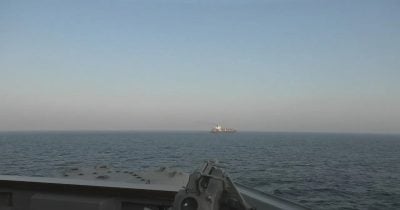
US military forces disabled the M/T Lavine, a merchant vessel operating in the Gulf of Oman, in an operation that underscores the fragile security situation along one of the world's most critical oil and gas chokepoints. The action comes as traders and insurers closely watch the Strait of Hormuz, where a prediction market now puts the odds of a return to normal traffic by September 30 at just 21.5%.
What happened to the M/T Lavine
The M/T Lavine was taken out of service by US forces in the Gulf of Oman on an undisclosed date. Details of the disablement remain limited, but the move highlights the military's willingness to interdict vessels it deems a threat in a region where commercial shipping routinely transits between the Arabian Sea and the Persian Gulf. The ship's flag state and cargo have not been confirmed by officials, and no further details on the crew have been released.
The Gulf of Oman sits just east of the Strait of Hormuz, a narrow waterway that handles roughly a fifth of the world's oil supply. Any disruption there can quickly rattle global energy markets.
Prediction market signals uncertainty
On Polymarket, a decentralized prediction platform, bettors have assigned only a 21.5% probability that Strait of Hormuz traffic will return to normal levels by the end of September. That means the vast majority expect continued disruption, whether from military operations, insurance costs, or diplomatic standoffs.
The low probability reflects the reality that tensions in the region have not eased. The disablement of a merchant ship by a foreign navy is not a routine event, and it adds to a pattern of incidents that have made shipping companies wary. Some vessels have been forced to reroute, adding time and fuel costs.
Why the Gulf of Oman matters
The Gulf of Oman is a transit corridor for tankers leaving the Strait of Hormuz. Any incident there directly affects the flow of crude and liquefied natural gas from major producers such as Saudi Arabia, Iran, Iraq, and the United Arab Emirates. Even a temporary halt in shipping can push up energy prices, and the current uncertainty is already being felt in the insurance market, where premiums for war risk coverage have climbed.
For now, the US has not detailed its legal justification for disabling the M/T Lavine, nor has it said whether the ship was involved in sanctions evasion, smuggling, or some other activity. That lack of transparency leaves shippers and insurers guessing about the next move.
The next key date is September 30. If the prediction market holds, the Strait of Hormuz will not be business as usual by then. And as long as US forces are actively interdicting merchant vessels, the risk to commercial shipping is unlikely to fade.