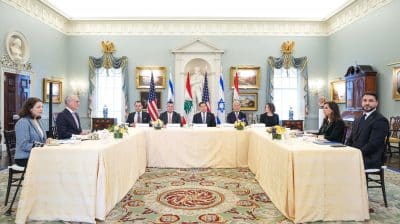
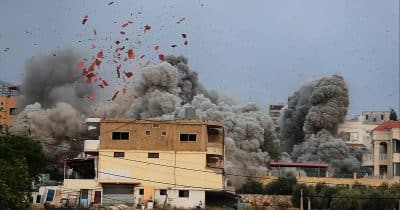
The United States and Iran have reached an agreement that includes a $300 billion funding mechanism, a deal that carries the potential to redraw alliances across the Middle East, deepen Iran’s economic ties, and rattle global oil markets. The fund, described in official documents, is the centerpiece of a broader understanding between the two longtime adversaries.
The $300 Billion Mechanism
Details on how the money will be raised, managed, or disbursed remain sparse. The agreement itself does not specify a single source for the $300 billion. Instead, it outlines a framework that could draw on a mix of frozen Iranian assets, international loans, and contributions from partner nations. The mechanism is designed to give Iran access to capital that has been largely cut off under sanctions.
For Tehran, the fund represents a lifeline. For Washington, it’s a bet that economic incentives can steer Iranian behavior away from nuclear brinkmanship and regional proxy conflicts. But the sheer size of the fund — roughly equivalent to Iran’s annual GDP before sanctions — makes it a target for critics who warn it could be used to finance destabilizing activities.
Shifting Alliances
If the fund becomes operational, it could scramble the current alignment of Middle Eastern powers. Countries like Saudi Arabia, the United Arab Emirates, and Israel have long viewed Iran as a primary threat. A flood of cash into Iran’s economy could embolden its influence in Iraq, Syria, Lebanon, and Yemen, potentially pushing those nations closer to Tehran and away from traditional U.S. partners.
On the other hand, a more economically integrated Iran might feel less need to project power through proxies. The fund could act as a lever for moderation — if Iran’s leadership chooses stability over expansion. That’s a big if.
Economic and Oil Implications
The fund is also likely to affect global energy markets. Iran sits on the world’s fourth-largest oil reserves and could ramp up exports quickly if sanctions are further eased. A $300 billion injection into its economy would speed up that process. More Iranian oil on the market would push prices down, a prospect that pleases importing nations but alarms OPEC members who rely on higher prices to balance their budgets.
Enhanced economic integration doesn’t stop at oil. Iran’s location along the Silk Road corridor makes it a natural hub for trade between Asia, the Middle East, and Europe. With capital, its infrastructure — ports, railways, pipelines — could be modernized, opening new routes for goods and energy.
What the Analysts See
Suzanne Maloney, a Middle East expert at the Brookings Institution, has examined the $300 billion mechanism in depth. Her analysis points to the fund’s potential to reshape regional dynamics, though she also underscores the risks. Without strong oversight, she argues, the money could flow to the Islamic Revolutionary Guard Corps or other hardline factions. Maloney’s work highlights how the fund’s success will depend not just on the numbers but on the political will on both sides.
The agreement still faces ratification hurdles in both capitals. In Washington, congressional skeptics have already called for hearings. In Tehran, hardliners view the deal with suspicion. The $300 billion fund is a bold bet — but whether it actually gets off the ground is an open question.