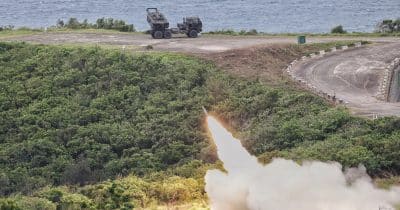
The US and Iran exchanged military strikes this week after a helicopter was downed near the Strait of Hormuz, a rapid escalation that sent global oil markets into a tailspin. For Bitcoin, the chaos has sharpened the long-running debate around its role as a safe haven — and for now, the narrative appears to be winning.
How the strikes unfolded
The tit-for-tat strikes began after an Iranian helicopter was shot down in disputed waters. The US confirmed retaliatory action against Iranian positions, and Iran responded with strikes of its own. By Thursday, both sides had publicly warned of further military steps, though diplomatic channels remained open.
Oil markets on edge
The confrontation hit oil markets immediately. Crude prices spiked as traders priced in the risk of a broader disruption in the Gulf — a region through which roughly a fifth of the world's oil passes. The uncertainty isn't going away quickly. Heightened US-Iran tensions could destabilize global supply for weeks, analysts inside the region say, even without a full blockade.
Bitcoin's moment
Bitcoin seen a noticeable uptick in trading volume this week, with the safe haven narrative getting a real-world test. The idea that a decentralized, non-sovereign asset holds value when traditional markets wobble has been around for years, but it's rarely been put to the test alongside a real geopolitical oil shock. This week, it passed a small but telling exam.
The rally wasn't massive — no one's calling it a parabolic move — but it was enough to remind people that Bitcoin doesn't always trade as a risk-on asset. Some traders rotated out of oil-sensitive equities and into crypto, a pattern that played out in real time on exchanges.
What the tension means going forward
The immediate question is whether the strikes escalate into something sustained. Both the US and Iran have signaled they don't want a full war, but the helicopter incident has created a trigger-happy dynamic. For oil markets, any further military action near the Strait of Hormuz means more volatility. For Bitcoin, that volatility is a proof-of-concept: a chance to show it can hold value when geopolitics goes sideways.