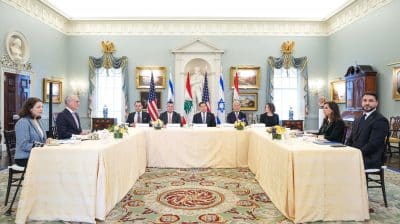
The United States has formally lifted its naval blockade of Iran, ending a years-long maritime standoff that had choked the country's oil exports and raised fears of a broader conflict. The move came hours after both sides signed a ceasefire agreement that includes a massive $300 billion reconstruction fund, according to officials briefed on the deal.
Ceasefire terms and the $300 billion fund
The ceasefire, finalized after months of back-channel talks, commits both nations to halt all hostile naval activity in the Persian Gulf and the Strait of Hormuz. A central pillar of the accord is the establishment of a $300 billion reconstruction fund, which will be jointly administered by the UN and the International Monetary Fund. Money is earmarked for rebuilding Iranian infrastructure damaged during the blockade era and for compensating international shipping firms that lost vessels or cargo.
Neither government has released the full text of the agreement, but sources say the fund will be financed through a combination of frozen Iranian assets held abroad, contributions from Gulf states, and a small levy on global oil transactions. Disbursements are expected to begin within 90 days, subject to verification that both sides are meeting their commitments.
Impact on regional stability and energy markets
The lifting of the blockade is likely to ease a major source of friction across the Middle East. Iran’s naval forces had frequently harassed commercial tankers in retaliation for the US blockade, and the standoff had drawn in other navies, including those of Saudi Arabia and the UAE. With the blockade gone, analysts expect a sharp drop in maritime insurance premiums for Gulf shipping and a gradual return of Iranian crude to global markets.
Oil prices dipped modestly on the news, though traders caution that the full effect on supply will take months because Iran’s export infrastructure needs repair. The $300 billion fund is designed to accelerate that recovery. Broader diplomatic engagement is also possible: several European and Asian capitals have already signaled interest in reopening embassies in Tehran.
What remains unresolved
The ceasefire does not address Iran’s missile program or its support for proxy groups in Yemen and Syria, issues that could derail the deal if they flare up again. The US has said it reserves the right to reimpose the blockade if Iran violates the ceasefire terms. Verification mechanisms are still being negotiated, and the next 60 days will be critical as both sides work out the details on the fund’s governance and the timeline for lifting secondary sanctions.