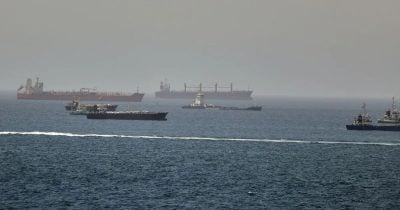
The United States is keeping a naval blockade in the Strait of Hormuz while tightening financial restrictions on companies connected to Iran. Washington announced the new sanctions this week, adding to a string of economic measures aimed at pressuring Tehran. The dual moves could inflame an already tense region and complicate any path toward a diplomatic resolution.
The Strait of Hormuz blockade
The US Navy has enforced the blockade for months, stopping and inspecting vessels transiting the narrow waterway. Roughly a fifth of the world's oil passes through the strait, making it a critical chokepoint for global energy supplies. By maintaining the blockade, Washington is effectively cutting off a key route for Iranian oil exports and limiting the movement of goods. The Pentagon has not disclosed how many ships have been diverted or detained, but the operation continues without a clear end date.
New sanctions on Iran-linked firms
The Treasury Department added several companies to its sanctions list, accusing them of funneling money or goods to entities tied to Iran's military and its nuclear program. Those hit with the measures will have their US-based assets frozen and are barred from doing business with American companies. Officials say the goal is to starve Iran of revenue used to fund proxy groups and weapons development. The latest designations cover firms based in the UAE, Turkey, and Hong Kong, though the department did not name them individually in its public statement.
Potential fallout for regional stability
Iran has repeatedly threatened to retaliate against any blockade, warning it could close the strait itself or launch attacks on US assets in the Gulf. The new sanctions risk pushing Tehran further away from negotiations, according to diplomats familiar with the situation. Any escalation could draw in other Gulf states, many of which have their own disputes with Iran. The US has said it is open to talks but has not offered specific concessions in exchange for a halt to the blockade.
Global economic impact
Oil markets have already reacted to the uncertainty, with benchmark prices fluctuating more than 5% over the past month. Shippers are paying higher insurance premiums to move crude through the region. Analysts inside the administration warn that a prolonged disruption could push fuel costs higher for consumers worldwide, though no official projections have been released. The blockade also threatens non-energy trade, including food and medical supplies bound for Iraq and other Gulf importers.
The US has not set a deadline for lifting the blockade or expanding the sanctions. The next round of diplomatic talks, if any, has yet to be scheduled.