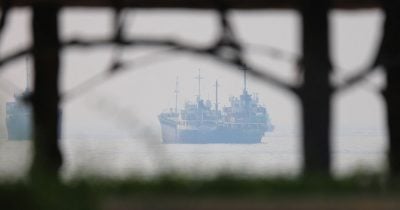
The U.S. military disabled a tanker in the Strait of Hormuz for violating a blockade, a move that escalates already tense relations with Iran and threatens to disrupt one of the world's most critical shipping lanes. The incident, which occurred amid rising U.S.-Iran tensions, has heightened concerns about regional security and the flow of oil through the narrow waterway.
Why the tanker was stopped
Military forces took action against the vessel after it attempted to run a blockade in the strait, according to the facts. The exact nature of the violation hasn't been detailed, but the move signals a firmer U.S. stance on enforcing restrictions in the area. Blockades in the Strait of Hormuz are rare and carry heavy risks, given that roughly a fifth of global oil consumption passes through the waterway each day.
The decision to disable the tanker rather than simply turn it back suggests the military viewed the breach as deliberate. It also marks a concrete escalation in how the U.S. is handling maritime challenges in the region.
Escalating U.S.-Iran tensions
The incident lands in the middle of a broader standoff between Washington and Tehran. Tensions have been building for months, with both sides trading threats and warnings over shipping rights and military presence in the strait. This latest action is likely to sharpen the rhetoric from Iran, which has previously threatened to close the waterway in response to pressure.
For the U.S., disabling a tanker is a forceful response that goes beyond verbal warnings. It's a physical assertion of control over a route that Iran considers vital to its own interests. The move could push both countries closer to a direct confrontation, though neither side has indicated a desire for full-scale conflict.
Shipping routes at risk
Global shipping companies are watching closely. The Strait of Hormuz is a chokepoint for oil and liquefied natural gas, and any disruption can send ripples through energy markets worldwide. If the U.S. military continues to stop and disable vessels, insurers may raise premiums for ships transiting the area, and some operators could reroute to longer, costlier paths.
The immediate impact on shipping routes is uncertain, but the risk is clear. A single incident like this can make carriers think twice about sending crews through a zone where military action is now a live possibility. The strait's narrow width means there's little room for error, and any escalation could quickly turn a localized event into a broader disruption.
Regional security concerns
Beyond the economic stakes, the incident raises the temperature in an already volatile region. Neighboring states that rely on the strait for exports and imports are likely to be uneasy about the prospect of repeated military interventions. The U.S. action could also embolden other navies to take a harder line, or it could provoke a response from Iran that draws in other players.
Security analysts will be watching for any signs of retaliation, whether through harassment of other vessels, drone activity, or diplomatic moves. The fact that the U.S. chose to disable the tanker rather than seize it or fire warning shots suggests a calibrated approach, but one that still carries significant risk of miscalculation.
Whether the move will deter other vessels from attempting to run the blockade remains an open question. The military has not said what it plans to do with the disabled tanker or whether it will release further details about the vessel's ownership or cargo.