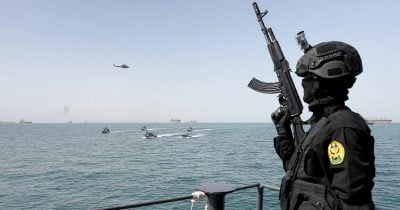
The United States and Saudi Arabia carried out a joint military strike against Iran-backed groups in Iraq, officials confirmed Tuesday. The operation targeted positions linked to militias that have launched repeated attacks on US forces in the region. The move risks further inflaming tensions between Washington and Tehran while raising questions about the stability of Gulf states and global energy markets.
What the strike targeted
The strike hit facilities used by Kata'ib Hezbollah and other Iran-aligned factions, according to defense officials. The groups have been responsible for dozens of drone and rocket attacks on US bases in Iraq and Syria since the Israel-Hamas war began in October. The joint operation with Saudi Arabia marks a rare public coordination between the two countries on offensive military action inside Iraq.
Neither the Pentagon nor the Saudi Ministry of Defense disclosed the exact number of casualties or the full scope of the damage. But officials described the targets as command nodes and weapons storage sites. The operation was conducted using precision munitions, they said, to minimize collateral damage.
Risks of a wider conflict
The strike comes at a delicate moment. Iran has vowed to retaliate for any attack on its proxies, and Iraqi political factions are already calling for the expulsion of US troops. Analysts tracking the region say the operation could trigger a cycle of escalation that draws in more actors.
Iraq's government condemned the strike, calling it a violation of its sovereignty. Meanwhile, Iran's foreign ministry warned of consequences, though it stopped short of announcing specific reprisals. The US has roughly 2,500 troops in Iraq as part of the anti-ISIS coalition, and their presence has become a flashpoint.
Market and security fallout
Oil prices ticked up slightly in early trading on the news, reflecting investor anxiety about potential disruptions to Gulf supply routes. Saudi Arabia, the world's largest crude exporter, has sought to maintain stability in energy markets even as it takes a harder line against Iranian proxies.
For Gulf states, the strike underscores a growing willingness to act militarily alongside the US against shared threats. But it also raises the risk of retaliation on Saudi soil or against its infrastructure. The kingdom has faced missile and drone attacks from Yemen's Houthi rebels, who are also backed by Iran, and any escalation in Iraq could embolden those attacks.
The broader question now is whether this operation will remain limited or spiral into a direct US-Iran confrontation. Washington has signaled it does not seek war with Iran, but it has also made clear it will continue to defend its forces. Tehran, for its part, has a history of asymmetric responses—through proxies, cyberattacks, or disruptions in the Strait of Hormuz.
No date has been set for the next round of talks between the US and Iran over the nuclear deal, which has been stalled for months. That diplomatic track now looks even more uncertain.