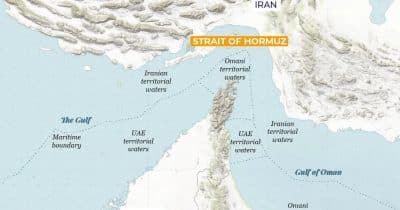
The United States has fired 49 Tomahawk cruise missiles at targets inside Iran in a major escalation that heightens geopolitical tensions across the region. The strike, launched without prior public warning, increases the risk of a ground invasion even as it preserves the stability of Iran's current regime and, paradoxically, reduces the likelihood of a formal declaration of war.
The Scale of the Attack
All 49 missiles were deployed from US Navy vessels in a coordinated volley, marking one of the largest single salvos against Iran in recent years. The Tomahawk is a long-range, precision-guided weapon capable of hitting hardened or deeply buried targets. Military analysts note the sheer number suggests the US intended to inflict significant damage on strategic Iranian assets — though the facts do not specify which sites were struck or the extent of destruction.
Geopolitical Fallout
The attack immediately ratchets up already tense relations between Washington and Tehran. Neighboring countries have responded by tightening security along their borders, while oil markets have already begun pricing in a disruption premium. The risk of a full-scale invasion — something the US has repeatedly said it wants to avoid — has risen sharply. That risk is real and immediate, not hypothetical.
Strategic Paradox
Despite the aggression, the strike is not expected to trigger a formal war. The facts indicate the missile barrage actually helps maintain the stability of Iran's regime. That seems counterintuitive, but it lines up with a long-running US strategy: apply enough pressure to force behavioral change without destabilizing the government to the point of collapse. A weakened but intact regime is less likely to lash out with a war declaration, and more likely to eventually negotiate from a position of weakness.
So the same attack that raises invasion odds also lowers the chance of an overt, legally declared conflict. That's the tightrope the administration is walking.
What Comes Next
Iran's response has not yet been announced. The country could retaliate directly, through proxies in Iraq or Yemen, or by escalating its nuclear program. For now, the world watches for Tehran's next move — and whether the US will follow up with more missiles or shift to a diplomatic track. No one expects a simple, quiet resolution.