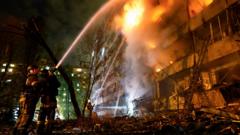
US weapons stockpiles are shrinking as the country continues airstrikes against Iran, raising questions about how long the military can sustain the current pace of operations. Meanwhile, prediction markets give a US-Iran deal by 2026 just a 29% chance.
Why stockpiles are running low
The ongoing strikes have consumed significant amounts of precision-guided munitions, missiles, and other ordnance. Defense officials have not disclosed exact numbers, but the depletion is serious enough to prompt internal reviews of production rates and supply chains. The US has been striking Iranian targets in response to attacks on American forces and allies, but each salvo eats into reserves that took years to build.
Replenishing those stocks isn't quick. Many weapons systems rely on specialized components that take months to manufacture. The Pentagon has asked Congress for supplemental funding, but the legislative process moves slowly. In the meantime, commanders are being forced to prioritize which targets to hit and which to leave for later.
What prediction markets say about a deal
Betting platforms that track geopolitical outcomes now put the odds of a US-Iran agreement by 2026 at 29% YES. That means traders see a roughly one-in-three chance that the two sides reach a formal deal within the next two years. The number has fluctuated with each new round of strikes and diplomatic overtures, but it has never climbed above 40%.
Another market asks whether Iran will accept a cap on uranium enrichment. The odds there stand at 32.5% YES — slightly higher than the broader deal, but still well below even money. A separate question about an enrichment moratorium was also listed, though no specific probability was given.
The enrichment question
Iran's nuclear program is at the heart of the standoff. The country has enriched uranium to levels close to weapons-grade, according to international inspectors. A cap on enrichment would limit how pure the uranium can get, making it harder to build a bomb quickly. A moratorium would go further, halting enrichment entirely.
Neither outcome looks likely in the near term. The strikes have hardened positions on both sides. Iran has responded by accelerating its nuclear work, not slowing it. US officials say they won't accept a nuclear-armed Iran, but the military options to prevent it are becoming more constrained as stocks dwindle.
What comes next
The Pentagon is expected to brief Congress next month on the state of weapons inventories and the timeline for replenishment. Lawmakers will then have to decide whether to approve additional funding. On the diplomatic front, no new talks are scheduled. The strikes continue.