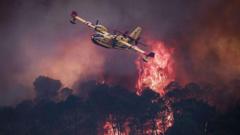
Wildfires are burning across parts of France and Spain this week, threatening to disrupt holiday travel plans for thousands of tourists. While the blazes are a seasonal event with no direct impact on crypto markets, they're adding to a broader climate-risk narrative that could accelerate adoption of blockchain-based insurance — a niche corner of the industry that's been quietly building for years.
Firefighters in southern France and along Spain's Mediterranean coast are battling multiple outbreaks, with authorities warning that travel to affected regions may be impacted. The fires come during peak summer tourism season, and local officials have urged visitors to check for road closures and evacuation orders. For most travelers, the immediate concern is rebooking flights or finding alternative accommodations. But for the crypto world, the real story is what happens next — and how quickly traditional insurers process claims.
The case for parametric insurance
Wildfires are a textbook use case for decentralized parametric insurance. Because they cause rapid, verifiable damage — satellite imagery can confirm a property is within a burn zone — smart contracts can trigger automatic payouts without the delays and disputes that plague traditional claims processing. Platforms like Nexus Mutual and others have already written policies for climate-related events, and a major disaster like this could drive a wave of new demand from businesses and homeowners frustrated with slow or denied payouts from conventional insurers.
📊 Market Data Snapshot
It's not a huge market yet. But every time a real-world event exposes the inefficiencies of the old system, a few more people start looking at the crypto alternative. The fires in France and Spain are unlikely to be the catalyst that pushes decentralized insurance into the mainstream, but they reinforce a long-term trend that most media coverage misses.
Energy grid risks for European miners
There's a second, more tangible link to crypto infrastructure. France generates about 70% of its electricity from nuclear power, and wildfires can force plant shutdowns if they threaten cooling water supplies or grid stability. Higher energy prices in Europe would squeeze margins for crypto miners operating in the region — particularly those in Scandinavia and Eastern Europe that rely on imported power. A sustained heatwave and fire season could push some operations to relocate or shut down temporarily, shaving a few percentage points off the global hashrate.
That's a minor effect in the grand scheme, but it's a real-world stress test for the resilience of mining infrastructure. Most crypto media will ignore it entirely.
Market backdrop: noise in a fearful market
The wildfires come at a time when crypto markets are already skittish. Bitcoin is trading around $63,000, with the Fear & Greed Index stuck at 27 — deep in fear territory. High BTC dominance means altcoins are underperforming, and any incremental uncertainty, even from an unrelated event like a wildfire, reinforces a risk-off posture. But traders shouldn't read anything into this. The fires are noise. The real drivers remain macro: Fed policy, inflation data, and the pace of institutional adoption.
What's worth watching is whether trading volumes for insurance-linked tokens or carbon credit projects like Toucan or KlimaDAO tick up in the coming weeks. That would be a leading indicator that the market is starting to price in climate risk — something it has largely ignored so far.