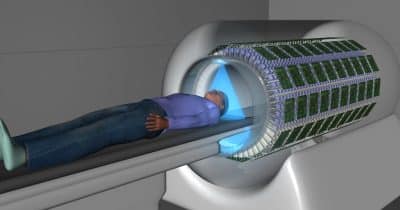
Midjourney, the company best known for its AI image generation tools, is proposing a 60-second ultrasonic scanner that it says could replace traditional MRI machines. The device, described as a potential disruptor in medical imaging, would challenge established players like GE Healthcare and Siemens Healthineers while opening up new possibilities in wellness and at-home diagnostics. The story was first reported by Crypto Briefing.
The proposal
Details are still light, but the core pitch is straightforward: a full-body scan in about a minute using ultrasound instead of the 30- to 60-minute MRI process. Midjourney says the technology could bring diagnostic imaging to settings where MRIs are impractical — urgent-care clinics, pharmacies, even homes. The company hasn't released a prototype or timeline, but the proposal alone has already stirred discussion in both the AI and medical-device communities.
If it works, the scanner could dramatically lower the cost and barrier to regular imaging. MRIs require large magnets, specialized rooms, and highly trained technicians. An ultrasonic alternative that delivers comparable resolution would be a sea change. Midjourney's background in generative AI suggests the scanner might rely on neural networks to reconstruct high-quality images from sparse ultrasound data — a technique researchers have been exploring for years. But the company hasn't confirmed the technical approach.
Crypto Briefing's scoop
The fact that the news broke on Crypto Briefing, rather than a medical or tech trade outlet, surprised some observers. But the publication has been expanding its tech coverage beyond blockchain and digital assets. Midjourney itself has no direct ties to crypto, though its founders have spoken publicly about decentralized compute and token-based incentives in the past. Crypto Briefing's editorial team did not immediately respond to a request for comment on how they obtained the story.
Midjourney has not set a date for a public demo or clinical trials. The medical-device regulatory pathway in the U.S. and Europe typically takes years, even for breakthrough devices. Whether the company can move from a proposal to a working prototype — and then to FDA clearance — remains the open question as of June 20, 2026.