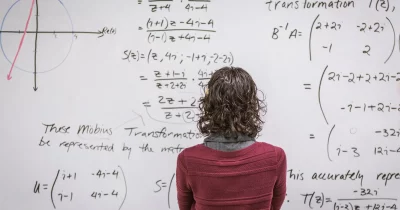
Axiom Math, a startup focused on mathematical artificial intelligence, has done something no other AI has done before: its algorithm-written proofs have been accepted for publication in peer-reviewed journals. The milestone marks the first time a machine-generated proof has passed the academic scrutiny that human mathematicians have long dominated.
How the proofs made it through review
The company didn't name the journals or the specific theorems involved. But the acceptance confirms that Axiom Math's algorithms can produce reasoning rigorous enough to satisfy human referees. The process likely involved multiple rounds of checking — standard for any paper but especially intense for one written by a machine.
Traditional peer review relies on human judgment about logic, novelty, and correctness. Axiom Math's system had to meet all three. That it did suggests the gap between human and machine mathematical ability is narrowing faster than many expected.
What algorithm-generated proofs could change
If the technology scales, it could speed up discovery in fields like number theory, topology, or algebra — areas where finding proofs can take months or years. Mathematicians might shift from constructing proofs themselves to directing AIs to do the heavy lifting, then verifying the output.
But the implications go beyond speed. Algorithms don't get tired, don't overlook edge cases, and can explore many logical paths simultaneously. That could uncover connections humans have missed.
There's also a cultural challenge. Mathematics has always been a human endeavor, with prestige tied to authorship and insight. If a machine writes the proof, who gets the credit? Journals may need new guidelines on attribution for AI-generated work.
Open questions about the review process itself
Can a human peer reviewer fully evaluate a proof a human didn't write? Some proofs are already so long and complex that only a handful of specialists can check them — adding an AI author could make verification even harder. On the other hand, if the AI explains its steps clearly, reviewing might become easier.
Axiom Math hasn't released details about how its system handles edge cases or whether it can reproduce its own results. Those are questions reviewers likely asked before giving the green light.
The next test will be whether other journals follow suit. One acceptance is a proof of concept, not a revolution. But if Axiom Math keeps publishing, the line between human and machine contributions in mathematics will blur a little more each time.