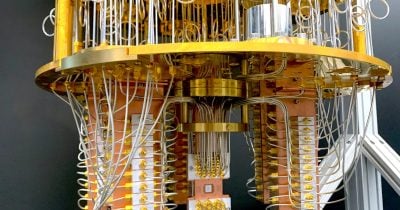
Boeing's Q4S satellite has successfully completed a critical quantum entanglement experiment, moving space-based quantum communications a step closer to reality. The test, which the company described as a key demonstration, confirms that the satellite can generate and maintain entangled particles in orbit.
What the test involved
Quantum entanglement links particles so that measuring one instantly affects its partner, no matter the distance. Satellites are seen as ideal platforms to extend this effect across continents, enabling unhackable encryption and ultra-secure data links. The Q4S satellite performed the experiment from its orbital position, producing pairs of entangled photons and verifying their correlated states.
Today's encryption can be broken by powerful computers; quantum key distribution (QKD) offers a theoretically unbreakable alternative. But QKD over long distances requires a network of satellites or ground stations that can relay entanglement without destroying it. The Boeing test shows the Q4S can be part of that chain. The company has not disclosed exact error rates or the duration of the entanglement, but the successful demonstration suggests the hardware is stable enough for further development.
What comes next
Boeing has not announced a timeline for deploying operational quantum satellites. The Q4S is a testbed, and the company will likely run more experiments to improve fidelity and range. Competitors, including Chinese and European programs, are racing to launch similar payloads. Whether Boeing can turn this test into a commercial service before rivals will depend on upcoming trials.