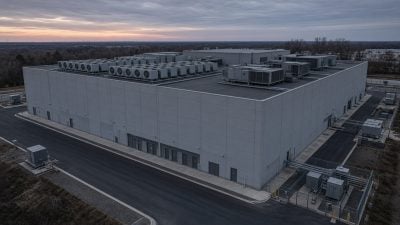
Citadel is projecting that debt tied to funding AI chip infrastructure will hit $500 billion by 2028. The forecast, released this week, points to a massive capital build-out that could ripple into crypto mining. If hardware becomes scarcer and more expensive, miners may have to rethink their cost structures — and investors may need to adjust their bets.
The $500 billion debt forecast
Citadel’s analysis covers the borrowing needed to finance data centers, chip fabrication plants, and related equipment for artificial intelligence. The $500 billion figure by 2028 represents a sharp ramp from current levels. Much of that debt will be used to secure advanced GPUs and custom ASICs — the same chips that power both AI training and cryptocurrency mining.
The timing matters. Chipmakers like Nvidia and AMD are already allocating production capacity to AI customers willing to pay a premium. Miners, who typically operate on thinner margins, could find themselves at the back of the line.
How mining hardware gets squeezed
Mining rigs rely on the same silicon that AI data centers are gobbling up. If Citadel’s forecast holds, demand for those chips will only intensify. That means higher prices for new mining hardware and longer lead times for replacements. For miners running older gear, the cost of upgrading could become prohibitive.
Some mining operations have already started hedging by locking in hardware contracts early. But a debt-fueled AI build-out could push spot prices for GPUs and ASICs beyond what many miners can stomach. The result: a tighter supply chain and potentially lower hash rate growth.
Investors recalibrate
The forecast is also reshaping how capital flows into crypto. Venture funds and institutional investors that once treated mining as a straightforward commodity play are now weighing the risk of hardware bottlenecks. If mining costs rise faster than Bitcoin’s price, returns compress.
That could push money toward mining companies with locked-in hardware deals or those that own their own chip supply. It might also accelerate interest in alternative consensus mechanisms that don’t rely on energy-intensive hardware. But for now, proof-of-work remains dominant, and the hardware squeeze is real.
What to watch by 2028
Citadel’s $500 billion figure is a projection, not a certainty. But it signals where the market is heading. Over the next two years, the intersection of AI and crypto hardware will become a key variable for anyone in mining. The question isn’t whether debt will flow into AI chips — it’s how much of that cost gets passed down to miners.
Miners and investors alike will be watching chip allocation announcements, debt issuance trends, and the price of second-hand hardware. If the forecast holds, the era of cheap mining rigs is over.