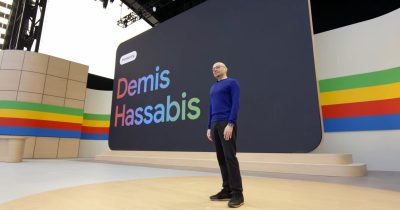
Demis Hassabis is stepping away from the day-to-day running of Google DeepMind, the artificial intelligence lab he co-founded and led for more than a decade. The move has already stirred unease about the company's ability to keep pushing the boundaries of AI research.
The Innovation Question
Hassabis has been the public face and strategic driver behind DeepMind's most celebrated breakthroughs, from AlphaGo to AlphaFold. His reduced role raises a straightforward concern: can the lab sustain its pace of discovery without him in the room? The company has not detailed who will take over his operational duties or how the research agenda might shift.
DeepMind's structure has changed before. Google absorbed the lab more tightly after the 2014 acquisition, and Hassabis himself has gradually moved toward broader strategic roles. But this is the first time he has formally pulled back from daily management. The timing matters. AI competition is fiercer than ever, with OpenAI, Anthropic, and a wave of startups all chasing the same talent and ideas.
Investor and Market Reaction
The leadership shakeup has already registered with investors. Confidence in DeepMind's long-term trajectory has taken a hit, and market observers note that stability around top AI talent is a key factor in valuation. Google's parent company Alphabet has not issued a public statement on the change, leaving analysts to parse the implications on their own.
Some of the concern is about continuity. DeepMind has a history of high-profile departures — researchers who left to start their own labs or join rivals. Hassabis's step back could accelerate that trend. If the person who built the culture is no longer running the place, the culture itself may shift.
What Hassabis Will Do Next
Hassabis has not said he is leaving Google entirely. He plans to stay involved in a less hands-on capacity, focusing on long-term strategy and high-level projects. That distinction matters, but it also leaves ambiguity. How much influence will he actually have? The company has not clarified his new title or reporting line.
For now, DeepMind's day-to-day operations will be handled by a team of senior executives. The company has not named a single successor, which some see as a sign that no one person can fill the gap. That may be true. But it also means decisions will be made by committee, and committees are rarely known for bold leaps.
The question hanging over the lab is not whether it will continue to produce good research — it almost certainly will. The question is whether it can still produce the kind of research that changes the field. That answer will take months, maybe years, to arrive.