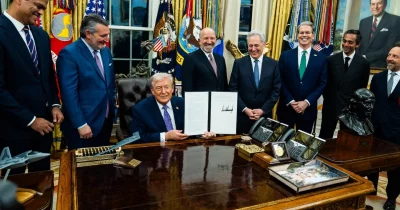
EPA Administrator Lee Zeldin rolled out a sweeping set of permitting reforms on Thursday aimed at making it faster to build the factories and data centers the U.S. wants to bring back from overseas. The proposal, if adopted, would directly affect the crypto industry — by easing the approval process for the power-hungry facilities that underpin bitcoin mining and AI computation.
The permitting overhaul
The reforms target the federal permitting bottleneck that has slowed everything from semiconductor fabs to electrical substations. Under Zeldin's plan, agencies would have tighter deadlines for environmental reviews, and certain projects tied to national competitiveness — including those for AI and reshored manufacturing — could qualify for expedited treatment. The EPA chief described the move as a way to cut red tape without rolling back environmental safeguards.
Why crypto and AI stand to benefit
Crypto mining and AI data centers share a need for reliable, cheap electricity. Both have struggled to get new facilities permitted in recent years, caught between local opposition and federal review cycles that can stretch past five years. The Zeldin proposal doesn't name digital assets directly, but the language around "AI development" and "reshoring competitiveness" covers the infrastructure that supports both sectors. Miners and cloud providers have been scouting U.S. sites; faster permitting could tip the balance for projects in states like Texas and New York.
Energy demand and the reshoring equation
More factories and data centers mean more power consumption — a reality that the EPA's proposal acknowledges. The reforms are expected to reshape energy demand by accelerating industrial construction, which in turn could tighten electricity markets in regions already straining under load growth. For crypto miners, that's a double-edged sword: easier permits now, but potentially higher power prices later if supply can't keep up. Zeldin's approach treats reshoring competitiveness and energy availability as linked problems, betting that faster permitting can solve both.
The proposal now enters a public comment period. Industry groups are likely to push for even broader exemptions, while environmental advocates are expected to challenge the shortened review timelines. For crypto, the next few months will show whether the reforms survive as drafted — and whether they deliver the infrastructure boost Zeldin promised.