Meta has released a new AI coding agent called Muse that runs inside a terminal and can coordinate multiple subagents to keep working even when the system crashes. But on the benchmarks that matter, Muse still trails behind established tools like Claude Code and Codex.
What Muse does differently
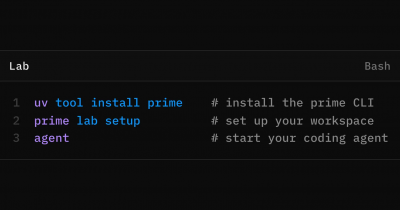
Muse is designed to operate in a command-line environment, not a web interface. That means developers can interact with it the same way they do with their existing tools — no extra browser tabs or plugins. The agent breaks down complex tasks into smaller pieces and hands them off to subagents, each handling a specific part of the job. If one subagent fails or the terminal session dies, Muse can pick up where it left off. That crash-survival feature is a clear differentiator in a field where most coding agents lose their state and have to restart from scratch.
Where it falls short
Despite those technical tricks, Muse hasn't caught up to the competition on performance. On the standard benchmarks used to measure coding agents — code generation accuracy, bug-fix speed, and multi-step reasoning — Claude Code and Codex both score higher. Meta hasn't released detailed benchmark numbers, but the company acknowledged the gap in its announcement. The question now is whether Muse's resilience in the terminal can make up for the accuracy deficit.
Why the terminal matters
Running in the terminal isn't just a design choice — it's a bet on how developers actually work. Many engineers spend their day in a terminal, jumping between git, build scripts, and debuggers. Muse fits into that workflow without forcing them to switch contexts. The subagent coordination also means a developer can ask Muse to refactor a large codebase and walk away, trusting that the agent will keep going even if the network drops or the laptop goes to sleep. That kind of reliability could be a selling point for teams that need long-running automation.
Meta hasn't said when Muse will be available to the public or whether it will be open-sourced like some of its other AI tools. For now, the agent is in an internal testing phase. The company will need to close the benchmark gap before Muse can seriously challenge Claude Code or Codex. No timeline has been given for that improvement.