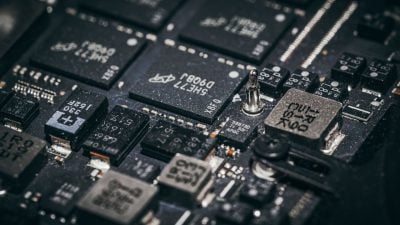
Micron and SK Hynix are moving ahead with strategic expansions, with support from CHIPS Act funding. The moves could help steady a memory chip market that has swung between shortages and gluts, and give both companies a stronger footing against global rivals.
What the expansions involve
Both companies are scaling up production capacity, though the specifics of their plans differ. Micron is building out its U.S. manufacturing footprint, while SK Hynix is expanding its existing facilities. The CHIPS Act money is a key piece of the financing, tying the projects to the U.S. government's push to bring more semiconductor manufacturing home.
The expansions aren't just about adding more wafers. They're aimed at next-generation memory technologies, which require more advanced equipment and cleaner cleanrooms. That's where the federal support matters most, because the upfront costs are steep.
Why the memory market needs a steadier hand
Memory chips have a history of boom-and-bust cycles. When demand spikes, prices climb and manufacturers rush to add capacity. Then supply catches up, prices collapse, and the same companies are left with idle lines. The new capacity from Micron and SK Hynix could smooth out those swings, at least in theory.
If both firms bring their expansions online in a coordinated way, the market might avoid the worst of the oversupply that has hurt profits in past downturns. But that depends on demand holding up, and on other players not flooding the market at the same time.
Global competition and the CHIPS Act angle
The CHIPS Act was designed to reduce reliance on Asian chipmakers, and these expansions are a direct test of that goal. Micron is already a major U.S. memory producer, but SK Hynix is based in South Korea. Its participation in the program shows how the funding can attract foreign investment into U.S. soil, even as it strengthens the domestic supply chain.
For SK Hynix, the expansion is also about staying competitive with Samsung and other rivals in the high-bandwidth memory segment. For Micron, it's about closing the gap in advanced manufacturing. The CHIPS Act money gives both a financial cushion that could let them take risks they might otherwise avoid.
The real question is whether the added capacity will actually stabilize prices, or just shift the timing of the next downturn. That answer won't come until the new fabs start shipping in volume, which is still a year or more away.