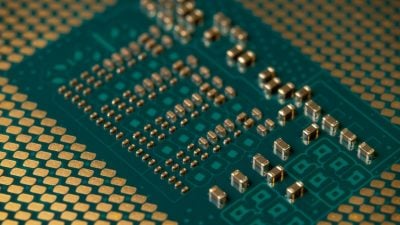
Microsoft has unveiled the Maia 300, a new artificial intelligence chip designed to reduce the company's reliance on Nvidia. The announcement marks Redmond's latest push to bring more of its AI infrastructure in-house. The Maia 300 could shift the balance in AI hardware, where Nvidia currently holds a dominant position.
Why Microsoft built its own AI silicon
Nvidia's graphics processing units have been the go-to hardware for training and running large AI models, and demand has outstripped supply for years. That dependence has given Nvidia significant pricing power and left cloud providers like Microsoft exposed to chip shortages and rising costs. By designing its own AI chip, Microsoft aims to take back control over a critical part of its stack. The Maia 300 is the company's answer to that problem, built specifically for AI workloads rather than general-purpose computing.
What the Maia 300 means for Nvidia
Nvidia's dominance in AI hardware has made it one of the most valuable companies in the world. A credible alternative from a major cloud customer threatens that position. If Microsoft shifts a meaningful share of its AI processing to the Maia 300, Nvidia loses not just revenue but also the lock-in that comes from developers building on its platform. The Maia 300 could reshape AI hardware dynamics by proving that hyperscalers can go it alone. That said, Nvidia's software ecosystem, CUDA, remains a powerful moat built over more than a decade. Matching it won't happen overnight.
The broader custom-chip race
Microsoft isn't the first to try. Other major cloud and technology companies have invested heavily in custom silicon for AI and general computing. The logic is straightforward: if you're buying millions of chips, designing your own can save money and reduce supply risk. But custom chips require massive upfront investment and years of software tuning. The Maia 300 will be judged on whether it can run real workloads at scale, not just on benchmarks.
What happens next
Microsoft hasn't said exactly when the Maia 300 will be available to customers or which services will use it first. The company is expected to detail performance and deployment plans in the coming months. For now, the chip's success depends on whether developers can run their AI models on it without major rewrites. Nvidia, meanwhile, continues to ship its own next-generation hardware. The competitive picture will become clearer as Microsoft puts the Maia 300 into production and shares real-world results.