German robotics startup Neura Robotics has closed a $1.2 billion funding round backed by Tether, Amazon, and Qualcomm, the company announced. The investment is among the largest ever in the robotics sector and will be used to scale production of its AI-powered collaborative robots, or cobots.
The $1.2 Billion Round
The round brings together three very different backers: Tether, the company behind the USDT stablecoin; Amazon, through its industrial innovation fund; and Qualcomm, the chipmaker. Neura didn't break down how much each investor contributed, but said the money will go toward expanding its manufacturing facility in Germany and accelerating development of new robot models.
The company, based in Metzingen, has been pushing to bring autonomous robots into factories, warehouses, and hospitals. Neura’s cobots are designed to work alongside people, handling repetitive or dangerous tasks while learning from their environment.
Who the Backers Are
Tether’s involvement stands out. The crypto company has been making a series of venture investments in recent years, but this is its biggest play in hardware. Amazon has long invested in robotics, both through its own logistics fleet and external startups. Qualcomm supplies the chips that power many connected devices, and a stake in Neura gives it a direct line into the growing cobot market.
Each backer brings something different. Tether provides capital; Amazon, a potential customer and distribution channel; Qualcomm, silicon expertise. Neura said the partnership will help it “redefine the boundaries of robotics,” though the company didn’t offer specific product timelines.
What Neura Robotics Does
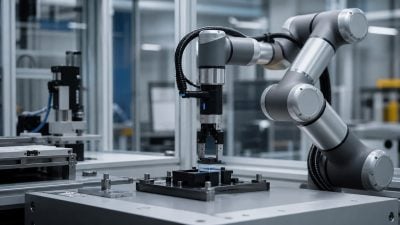
Neura builds robots that sense and react to people in real time. Its current lineup includes the Neura 5 series, a six-axis arm that can lift up to 12 kilograms. The robots use AI to adapt to changing layouts and new tasks without needing to be reprogrammed. The company claims its systems can reduce setup time from days to minutes.
So far, Neura has focused on manufacturing and logistics, but it’s also exploring medical applications, such as assisting in surgery. The company says its robots are already deployed at several unnamed automotive plants in Europe.
The funding round comes as demand for automation rises across industries struggling with labor shortages. Competitors include Boston Dynamics and Universal Robots, but Neura differentiates itself by emphasizing how its robots learn on the job.
Neura plans to double its workforce to around 1,200 people over the next two years. The company said it has begun building a new factory that will be able to produce several thousand cobots per year. First units from that facility are expected to ship in 2025.