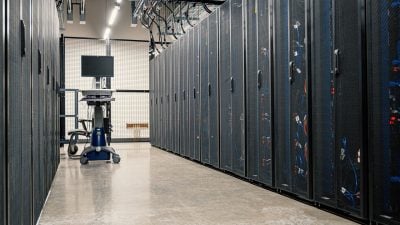
NVIDIA is partnering with SB Energy to lock in power capacity at the PORTS-Pike Technology Campus in Portsmouth, Ohio, where OpenAI will build and operate an AI factory. The initial deployment is expected to provide 4.25 gigawatts of capacity, and the total opportunity could reach roughly $600 billion in NVIDIA compute through 2030.
What the deal covers
The arrangement is not a blank check. NVIDIA's support is limited to defined portions of lease and power payments and a specified residual-value commitment, not the full cost. The guarantee becomes effective in phases as data centers are placed in service between 2028 and 2030. OpenAI has committed to substantial deployments of NVIDIA AI infrastructure through 2030, representing approximately 12 gigawatts of NVIDIA compute. That could expand to about 16 gigawatts if NVIDIA extends the PORTS-Pike arrangement beyond the initial 4.25 gigawatts.
📊 Market Data Snapshot
Each generation of NVIDIA AI factory systems at PORTS-Pike could represent roughly 1.5 million NVIDIA GPUs and $150 billion to $200 billion in NVIDIA revenue. The site can support multiple upgrade cycles over 20 years.
Why power and real estate became the bottleneck
Frontier AI labs like OpenAI are running into a physical constraint: there isn't enough power or data center space to run the next wave of models. This deal is part of a broader race among hyperscalers and AI labs to secure energy and infrastructure, as compute demand outpaces supply. By tying up 4.25 GW in Ohio, NVIDIA is treating power and real estate as strategic assets, not just chip design.
The scale is hard to overstate. Four and a quarter gigawatts is roughly the output of a large nuclear reactor. And the site is built for decades of upgrades, meaning NVIDIA and OpenAI are thinking in terms of 20-year cycles, not quarterly earnings.
The liability hiding in plain sight
Here's the part that doesn't get the same attention. NVIDIA is effectively underwriting OpenAI's expansion with limited guarantees on lease and power payments and a residual-value commitment. That's a contingent liability that could run into billions if OpenAI's AI factory underperforms or the AI bubble bursts. The guarantee phases in as data centers come online, but the total exposure is enormous.
Investors should be asking how much of this is off-balance-sheet and what happens if OpenAI scales back. The deal is bullish for NVIDIA's revenue visibility, but it also ties the chipmaker's fortunes to OpenAI's ability to keep paying the power bill.
What happens next
The first data centers are expected to come online in 2028, with the guarantee kicking in as each phase is placed in service. Whether NVIDIA extends the arrangement beyond the initial 4.25 GW will depend on how quickly OpenAI scales its deployments. The potential expansion to 16 GW is on the table, but it's not guaranteed. Construction timelines, grid connections, and power prices will all play a role.
For now, the deal gives NVIDIA a concrete answer to the question of where the next generation of AI compute will live. The answer is Portsmouth, Ohio.