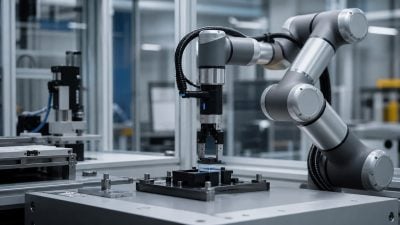
Nvidia CEO Jensen Huang says the world has reached a turning point for physical artificial intelligence — a moment he compares to the launch of ChatGPT for generative AI. Speaking at a recent event, Huang described the shift as a $50 trillion opportunity, but warned that the rise of physical AI brings serious risks: GPU supply strains, regulatory hurdles, and market concentration.
What physical AI means
Physical AI refers to machines that can perceive, reason, and act in the real world — think autonomous robots, self-driving vehicles, and industrial automation. Huang argues that the technology has now crossed a threshold where it can move beyond labs and into everyday use. He called it the 'ChatGPT moment' for the field, suggesting a sudden acceleration in adoption and investment.
The $50 trillion prize
Huang sees a massive economic upside. He estimates that physical AI could unlock $50 trillion in value over the coming years, transforming industries from manufacturing to logistics. Nvidia, already a dominant player in AI chips, stands to benefit enormously. But the scale of the opportunity also means the company will face intense pressure to deliver enough hardware to meet demand.
Risks on the road ahead
Huang didn't sugarcoat the challenges. GPU supply strains are already a bottleneck for AI training, and physical AI will require even more computing power. Regulatory challenges are another concern — governments are still figuring out how to oversee autonomous systems. And market concentration is a risk: a few big players could end up controlling the most advanced physical AI technology, potentially stifling competition and innovation.
These aren't hypothetical worries. The same supply constraints that have plagued the AI chip market could worsen as physical AI scales. Meanwhile, regulators in the U.S., Europe, and China are moving at different speeds, creating an uneven playing field. Huang's comments suggest he sees these issues as manageable but not trivial.
For now, the industry is watching to see how Nvidia and its partners respond. The company has already started ramping up production of its next-generation chips, but whether that will be enough remains an open question. The 'ChatGPT moment' for physical AI has arrived — but the hard work is just beginning.