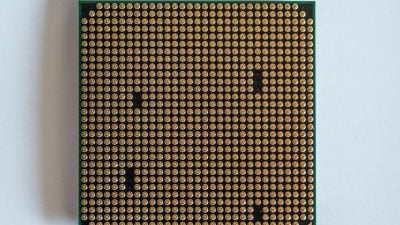
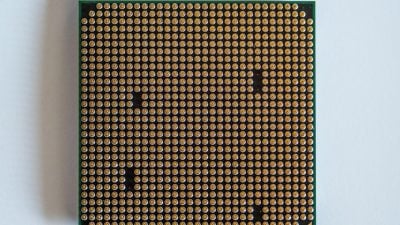
Nvidia expects its CPU revenue to more than double by fiscal 2028, according to the company's latest projections. The forecast signals a direct challenge to Intel and AMD in a market where Nvidia has long been known primarily for its GPUs. The growth would hinge on AI workloads that increasingly demand tightly coupled processing and memory.
Why CPUs are suddenly central
For years, Nvidia's graphics cards handled the heavy lifting in AI training and inference. But data center servers still need a host processor to manage data flow, run the operating system, and coordinate the GPU. Nvidia's own CPU line, launched in 2021 under the Grace brand, targets exactly that role. The company says its Grace CPU is designed to work with its own GPUs over high-speed interconnects, cutting bottlenecks that slow down AI jobs.
That integration is what the company sees as the key advantage. By pairing its CPUs with its GPUs, Nvidia can control the whole data path inside a server. The result, the company argues, is higher efficiency per watt and per dollar than a mixed-vendor setup. Analysts following the server market say that pitch is landing, especially among cloud providers building out AI infrastructure at scale.
Pressure on Intel and AMD
Intel and AMD have dominated the server CPU market for decades. Nvidia's growth forecast suggests it plans to take a real share of that business, not just a niche. Both incumbents have their own AI acceleration strategies, but they typically rely on separate GPU parts from Nvidia or others. A server that uses Nvidia's CPU and GPU together may be simpler to deploy and manage.
The company's fiscal 2028 projection is a long-range target, but it aligns with the broader trend of AI hardware shifting from general-purpose chips toward specialized combinations. If Nvidia hits the mark, it would change the competitive balance in server chips, where Intel and AMD have been the default choices for data center operators.
Integrated efficiency as the selling point
The efficiency argument is central to Nvidia's pitch. AI systems draw enormous power, and data center operators are under pressure to cut energy use. Nvidia claims that a tight coupling between CPU and GPU reduces the time data spends moving across slower bus connections. That means less waiting, fewer wasted cycles, and lower power consumption.
In practice, that could make a server with Nvidia's CPU and GPU pair more attractive than a machine that combines an Intel or AMD processor with a separate Nvidia accelerator. The company is betting that customers will prefer a single vendor for the whole system, especially as AI models grow larger and more complex.
What comes next
Nvidia's fiscal 2028 is roughly two years away. The company has not given a specific date for when the doubled revenue would be reached, but the projection sets an internal bar for its data center and AI product lines. The server market moves slowly, though. Adoption of new CPU architectures takes time, and Intel and AMD are not standing still.
The immediate question is whether Nvidia's CPU line can win over the big cloud providers and enterprise data centers. Its GPU business gives it an opening, but the CPU market is a different battle. The next few quarters of orders and design wins will show whether the fiscal 2028 target is realistic or just a stretch goal.