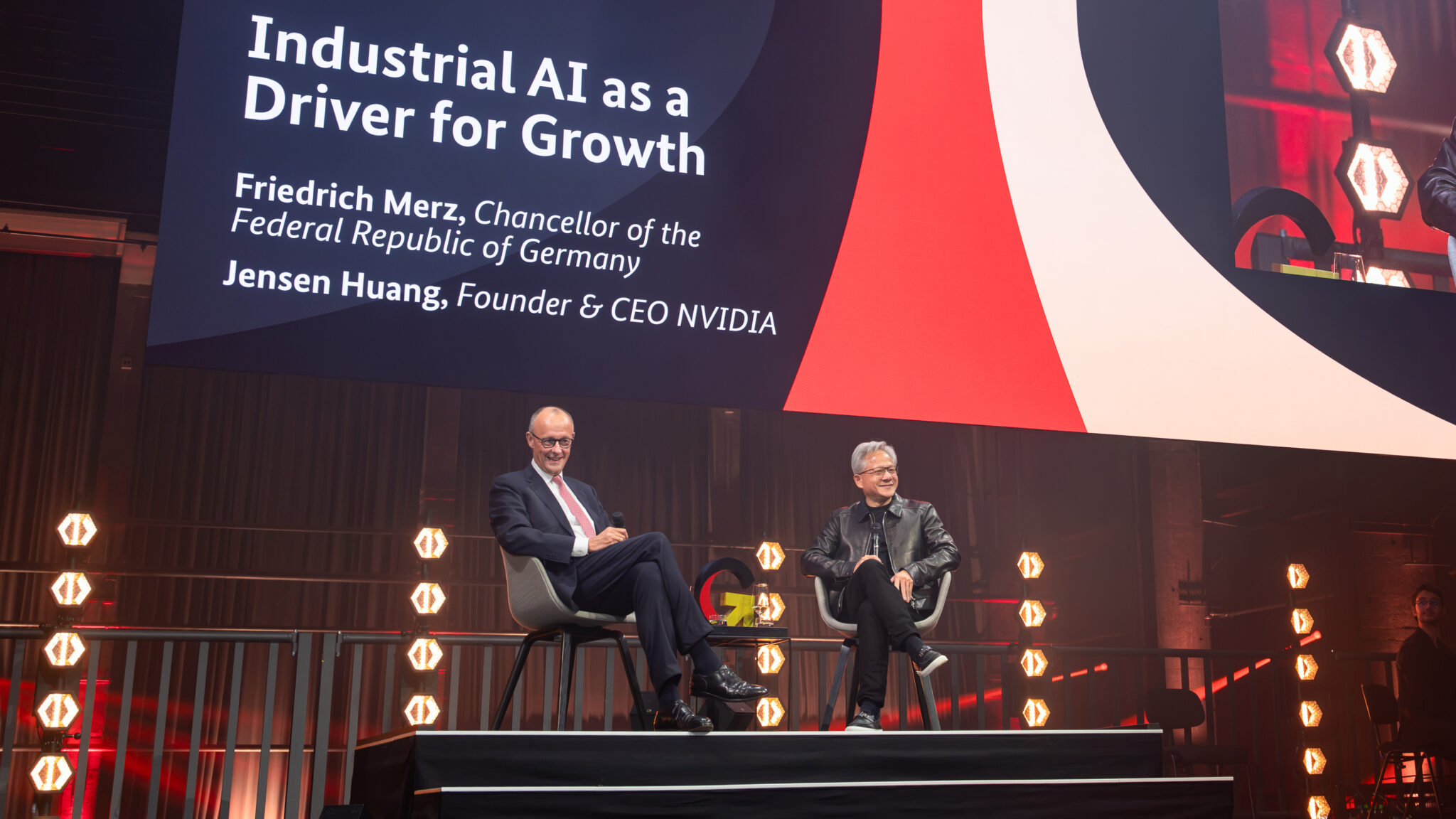
Nvidia opened GTC Berlin on Monday with a pitch centered on AI infrastructure. Jensen Huang, the company's CEO, framed the buildout of AI computing as the foundation of a new industrial revolution. More than 100 sessions are scheduled across the event.
Huang's industrial revolution framing
Huang's opening address put infrastructure at the center of the company's message. He described AI infrastructure as the basis of a new industrial revolution, positioning the hardware and software that power AI models as a foundational layer for broad economic change. The remarks set the tone for a conference built around the systems that train and run AI models rather than the applications themselves.
Nvidia has spent the past two years at the center of the AI boom, and its events have become a stage for the company to argue that the demand for computing power is structural rather than a passing spike. GTC Berlin extends that argument into Europe, where governments and enterprises are weighing their own AI investments.
What's on the schedule in Berlin
More than 100 sessions are underway at the conference, spanning the technical and commercial sides of AI infrastructure. The agenda reflects Nvidia's broad push: topics range from data center design and networking to model training and deployment. The volume of sessions signals that Nvidia is using the event to reach developers, researchers, and business customers at once.
The Berlin stop comes as Nvidia works to deepen its presence in Europe. The company has been courting European customers and policymakers as the region debates how much of the AI supply chain it wants to build at home.
The infrastructure argument, in context
Nvidia's framing is straightforward: before companies can deploy AI products, they need the computing capacity to build and run them. That argument has underpinned the company's growth and its pitch to investors and customers alike. At GTC Berlin, Huang is making the case that the infrastructure layer is where the next phase of industrial change will be decided.
The message lands with particular weight in Europe, where AI investment has lagged the U.S. and where governments are weighing subsidies and regulations aimed at closing the gap. Nvidia's conference gives those audiences a look at the company's roadmap and a forum to discuss what building AI capacity actually requires.
Europe's stake in the buildout
The Berlin event puts Nvidia in front of an audience that's actively deciding how much AI infrastructure to fund and where to put it. European enterprises and public agencies are under pressure to adopt AI tools while keeping data and computing within the region. Nvidia's pitch is aimed squarely at that tension, offering the systems that underpin large-scale AI work.
For the company, the conference is also a chance to shore up relationships with European partners as competition in AI hardware intensifies. The sessions running through the week will show how Nvidia plans to translate its infrastructure argument into deals and deployments on the continent.
The conference continues with sessions across its schedule, and Huang's opening remarks set the terms for the discussion: Nvidia wants the AI buildout treated as industrial policy, not a tech cycle. Whether European buyers respond on those terms will be tested in the months ahead.