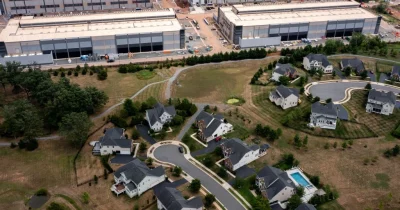
Nvidia has floated a new initiative, dubbed XFRA, that would place small-scale AI data centers inside residential backyards, tapping into homeowners' extra electricity to run decentralized computing infrastructure. The concept is still early-stage, and the chipmaker acknowledges two big hurdles: whether the idea can scale beyond a few pilot sites and whether neighbors will actually want a humming mini data center next to their grill.
What XFRA would look like
Under the proposal, a compact, weatherproofed server rack — roughly the size of a backyard shed — would connect to a home's existing electrical panel. The unit would draw only surplus power, meaning it wouldn't compete with household appliances or air conditioning. Nvidia sees this as a way to distribute AI workloads across many small nodes rather than concentrating them in massive, energy-hungry warehouses.
The company hasn't released technical specs or a timeline. Based on what it has described, each backyard unit would handle inference tasks — the part of AI that runs trained models — not the heavy training that demands clusters of thousands of GPUs. That keeps power draw manageable, but it also limits what the nodes can do.
The scalability question
Rolling out thousands of backyard data centers isn't simple. Each unit needs a stable internet connection, security against theft or vandalism, and a homeowner willing to host it. Nvidia hasn't said how many homes it would need to make the network viable, but the math gets tough fast. A single large data center can run millions of inferences per second. Backyard nodes, each with maybe one or two GPUs, would need to be densely packed to match that throughput — and that runs into geographic and regulatory limits.
Local zoning codes in most residential areas don't account for commercial-grade computing equipment. Noise from cooling fans, even if muffled, could trigger complaints. And then there's the electrical panel: not every home has enough spare capacity to run a GPU server around the clock.
Homeowner acceptance
The bigger wild card may be the human one. Nvidia will have to convince people that a whirring, heat-radiating box in their yard is a good trade for a small rent check or reduced electricity bill. The company hasn't proposed specific compensation, but the model would likely involve revenue sharing from the AI tasks the node performs.
Privacy concerns are inevitable. Even if the unit only processes anonymized data, homeowners might worry about what's running on hardware they can't control. Nvidia would need to offer transparent monitoring and a kill switch — and even then, some neighborhoods will simply say no.
The company is expected to share more details about XFRA later this year, including potential pilot locations and partner utilities. Until then, the idea remains a sketch — one that could reshape how AI computing is distributed, or end up as a footnote in Nvidia's long list of experiments.