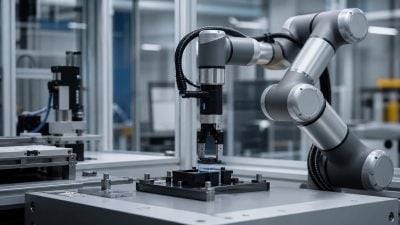
Nvidia released Cosmos 3 on Tuesday, a world model built to improve how robots move and understand their surroundings. The model is open and free to use — a move that could hand smaller robotics startups tools once reserved for deep-pocketed labs.
What Cosmos 3 does
The model simulates physical environments, letting robots practice navigation in a virtual space before they hit the real world. That means a delivery bot or a warehouse picker can learn to dodge obstacles, read floor plans, and adjust to changing layouts without crashing into a wall first.
Nvidia calls it a “world model” — a type of AI that builds a working internal picture of the environment. Cosmos 3 can generate synthetic training data for specific tasks, which cuts the need for expensive real-world testing.
Why open matters
By releasing the model without a paywall, Nvidia is betting that wider use will accelerate the whole field. Small companies and university labs can now experiment with navigation AI without renting a data center or buying a fleet of robots.
The open approach lets developers tweak the model for niche uses — think vineyard-monitoring drones or hospital supply carts — that might not justify the R&D budget at a giant firm. Nvidia did not say how many organisations have already signed up to use Cosmos 3.
Democratisation like this has a practical edge: the more people build on the model, the more feedback Nvidia gets, and the faster the next version improves. That feedback loop is especially critical for robotics, where edge cases — a stairwell that’s oddly narrow, a floor wet with cleaning solution — are endless.
Robot navigation has long been a gatekept problem. Big automakers and military contractors could afford to run thousands of simulations; smaller players had to improvise. Cosmos 3 doesn’t erase that gap entirely, but it narrows it. Any team can grab the code, adapt it, and deploy a navigation system that’s been battle-tested in simulation.
Nvidia didn’t release performance benchmarks for Cosmos 3 alongside the announcement, so it’s unclear how the model stacks up against proprietary systems from companies like Google or Amazon. What is clear is that the company wants to be the platform underneath the next generation of moving machines — from delivery vans to surgical arms.
The model is available now on Nvidia’s developer portal. The company plans to release updates based on community contributions, though no timeline for the next version has been announced.