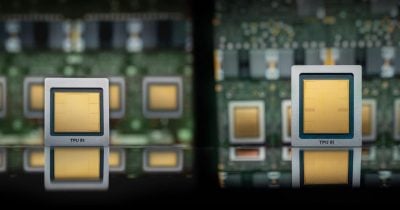
OpenAI's Jalapeño chip outperforms commercial systems in AI inference efficiency, according to the latest available information. That's the short version. The longer version is that the chip, developed by the AI company best known for its large language models, appears to have cracked a problem that's become a bottleneck for the industry: running trained models quickly and cheaply.
Why inference efficiency matters
Inference is what happens when a trained AI model is put to work. A model that's been taught to recognize images or generate text doesn't just sit there — it gets queried, and each query demands computation. That computation is inference. When you ask a chatbot a question, it runs an inference. When an autonomous car identifies a pedestrian, that's inference. The faster and cheaper this runs, the better. If a chip can do it with less power, that's not just a technical win; it's a business win.
Commercial systems — the kind you'd buy from big hardware makers — have been the standard for this kind of work. But Jalapeño is beating them on efficiency. That doesn't necessarily mean it's faster in raw speed. Efficiency can mean getting more results per watt, or per dollar. It can also mean lower latency, which is the delay between a request and a response. For real-time applications, latency is everything.
What's known about the chip
Details about Jalapeño's architecture are thin. There's no word on what process node it uses, how many transistors it packs, or what memory configuration it relies on. The only claim on the record is that it outperforms commercial systems in inference efficiency. That's it.
For a company like OpenAI, which runs enormous data centers to serve millions of users, having its own efficient chip could cut costs and reduce dependence on outside suppliers. But no plans for production or deployment have been announced. The company hasn't said whether Jalapeño will stay in the lab or make it into real-world systems.
It's also unclear how the performance was measured. Different benchmarks can produce wildly different results. Efficiency can be measured in tokens per second, or in energy per inference, or in cost per million requests. Without knowing the benchmark, it's hard to gauge how meaningful the claim is.
What the chip isn't saying
Notably, the announcement doesn't claim that Jalapeño outperforms commercial systems on every metric. It's specifically inference efficiency. Training still takes a different kind of hardware, and the chip may not be designed for that. That's a hint that OpenAI is focusing on the deployment side of the business, not the training side.
For now, the big picture is simple. OpenAI has a chip that's more efficient at inference than what's on the market. That could have ripple effects across the industry if it's real and if it's scalable. But the company has been quiet about the details, and the only way to verify is to see it in action.
The open question is when — or if — Jalapeño moves from a reported result to a working product. No timeline has been given. That's the next thing to watch.