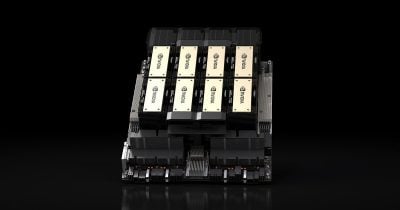
Power Integrations has introduced ultra-slim power supply unit designs built for Nvidia's 800 VDC data center architecture. The new PSUs are aimed at AI data centers, where space and power efficiency are critical. The company says the designs could lower costs and make it easier to scale infrastructure.
Why the form factor matters
Data centers running Nvidia's 800 VDC architecture need power supplies that fit tighter spaces without sacrificing performance. Power Integrations' ultra-slim PSUs are designed to do exactly that. By shrinking the physical footprint, operators can pack more computing power into the same rack space. That's a direct path to better efficiency for AI workloads, which demand huge amounts of energy.
The company didn't release specific dimensions or wattage figures, but the focus is on reducing the height of the PSU while maintaining high power density. That's a balancing act — thinner units typically struggle with heat dissipation. Power Integrations claims its design overcomes that challenge.
AI training and inference require massive clusters of GPUs. Those clusters draw enormous power, and the power supply is often a bottleneck. More efficient PSUs mean less energy wasted as heat, which also cuts cooling costs. The new designs target exactly that: better efficiency at the system level.
Scalability is another factor. Data center operators are racing to build out capacity for AI. If a PSU design can be made slimmer, it allows for denser configurations. That could help operators deploy more compute nodes without expanding their physical footprint. Power Integrations is positioning these PSUs as a way to do more with less.
The announcement comes as Nvidia's 800 VDC architecture gains traction in hyperscale data centers. Power Integrations is a known supplier in the power electronics space, and this move ties its product roadmap directly to Nvidia's platform.
No timeline for availability was given. The designs are out now, but actual deployment will depend on data center builders adopting them in their next-generation racks.