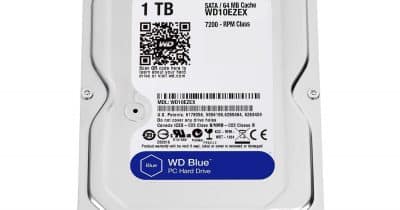
SanDisk Corporation shares have posted a monthly Relative Strength Index reading above 99 — a level analyst Lark Davis claims no publicly traded stock has ever reached. The reading comes as SNDK stock surges over 780% year-to-date in 2026 and more than 5,400% since spinning off from Western Digital in February 2025. The stock now trades near $2,138, up from its IPO price of roughly $38.50, as the pure-play NAND and SSD company rides a wave of AI-driven demand for enterprise storage.
Why the RSI reading matters
The Relative Strength Index is a momentum oscillator that runs from 0 to 100. Readings above 70 are typically considered overbought, signaling a stock may be due for a pullback. SanDisk's RSI above 99 puts it in uncharted territory — well beyond the thresholds that usually trigger caution among technical traders. Earlier in 2026, both AMD and Intel saw overbought RSI surges that extended past standard warning signals before momentum eventually stalled.
Critics have compared the SanDisk rally to the dot-com era, warning of speculative excess and valuations that have detached from revenue reality. But Bulls argue the underlying demand is structural, not speculative. AI workloads require high-density, fast-access NAND storage at scale, and SanDisk's most recent quarterly report showed revenue grew 251% year-over-year, driven largely by hyperscaler AI infrastructure spending on enterprise SSD demand.
The AI demand story vs. speculative fear
SanDisk became a standalone NAND and SSD company after its spinoff from Western Digital in early 2025. Since then, the stock has climbed more than 5,400%, a move that has drawn both enthusiasm and skepticism. Bulls point to the revenue growth as evidence that the demand is real — hyperscalers are buying enterprise SSDs in bulk to support AI training and inference workloads that require fast, dense storage.
On the other side, macro investor Ray Dalio has warned of AI liquidity risks that could force investors to liquidate paper gains when debt obligations come due. Dalio's caution echoes broader concerns that the rally may be fueled by leveraged speculation rather than sustainable fundamentals. A comparable AI stock rally that pushed past 5,100% eventually gave back roughly 35% of its gains, a pattern some analysts worry could repeat with SanDisk.
A historical caution
The RSI reading alone doesn't predict a crash, but it does highlight how extreme the momentum has become. The last time a stock soared this fast and this far, critics note, it was the dot-com bubble. Back then, companies with promising technology but thin earnings saw valuations collapse when sentiment shifted. SanDisk's revenue growth is real, but the stock price has far outpaced earnings — leaving it vulnerable if AI spending slows or if interest rates tighten liquidity.
What remains unresolved is whether SanDisk's structural demand story can sustain the valuation, or if the RSI above 99 is a signal that the rally has overshot. For now, the market is watching to see if the stock can consolidate its gains — or if a correction, like the 35% pullback seen in a similar AI rally, is on the horizon.