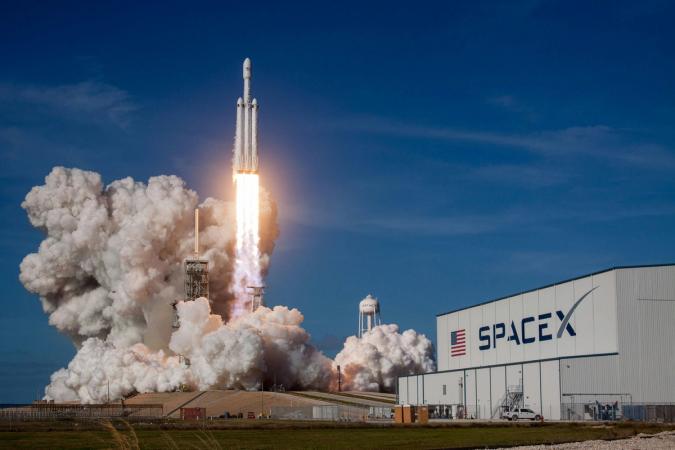
SpaceX disclosed a binding commitment of roughly $40 billion in financing to pay for AI chips and related data center equipment, according to a regulatory filing on Monday. The company described it as the largest committed GPU financing on record. Apollo is named in connection with the deal, pointing to a private-credit structure rather than anything blockchain-based.
That distinction matters more than the headline number. The money is going into Nvidia-class hardware and the buildings that house it, not into tokenized compute networks or DePIN projects. For a crypto market that's already leaning on Bitcoin dominance and little else, it's a reminder of where institutional capital is actually heading.
What the filing actually says
The disclosure itself is thin. SpaceX committed to the financing, the funds are earmarked for AI chips and data center equipment, and the company is calling it the biggest committed GPU financing to date. The filing doesn't spell out the collateral, the drawdown schedule or Apollo's exact role.
📊 Market Data Snapshot
What's clear is the scale. A $40 billion commitment from a single private company is sovereign-wealth territory, and it's the kind of number that gets structured by credit desks, not venture funds. Apollo's presence suggests a private-credit or asset-backed arrangement — the sort of vehicle that turns hardware into collateral and future cash flows into a yield product.
Why crypto's AI narrative takes the hit
Crypto-AI tokens have spent the past couple of years selling a simple pitch: blockchain can finance compute more efficiently than traditional capital markets. A $40 billion commitment flowing through private credit undercuts that pitch directly. The real money isn't waiting for a decentralized alternative. It's going straight to chips and data centers.
This doesn't move BTC or ETH in any mechanical way. There's no crypto asset exposure in the deal. But the capital-allocation signal is hard to ignore. If GPUs become a recognized collateral class in private credit, the case for tokenized compute gets weaker, not stronger. The projects with actual revenue may survive. The long tail of narrative-driven AI coins probably won't.
A commitment, not a check
One detail worth holding onto: this is a binding commitment, not drawn capital. It's closer to a standby facility that SpaceX can tap as needed than a $40 billion wire transfer. Read that way, it's a hedge on chip prices and supply — a bet that GPU capacity will be scarce and expensive enough to justify locking in financing now.
That's bullish for the AI hardware trade and a warning sign for anyone treating the AI capex cycle as risk-free. If the bubble narrative gains traction, high-beta assets — crypto included — are the first place the damage shows up.
The asset class nobody's watching yet
The more interesting question is what Apollo does next. If this deal involves securitizing GPU cash flows or using the chips as loan collateral, it could set a template for compute-backed debt sold to yield-hungry institutions. That's a TradFi instrument offering predictable returns tied to AI demand — competing directly with DeFi and crypto yield for the same institutional allocation.
Watch for follow-on filings or Apollo investor materials for details. For now, the deal is a private-credit story wearing an AI headline. Bitcoin sitting near $80K with neutral sentiment and thin volume isn't going to react to it. The AI-token complex might, briefly, and probably in the wrong direction.