Tesla officially kicked off high-volume production of the Tesla Semi at its Sparks, Nevada factory on Thursday, roughly nine years after the truck first rolled onto a Tesla event stage as a concept in late 2017. The event was livestreamed but invite-only, and the company's chief executive wasn't there to cut the ribbon.
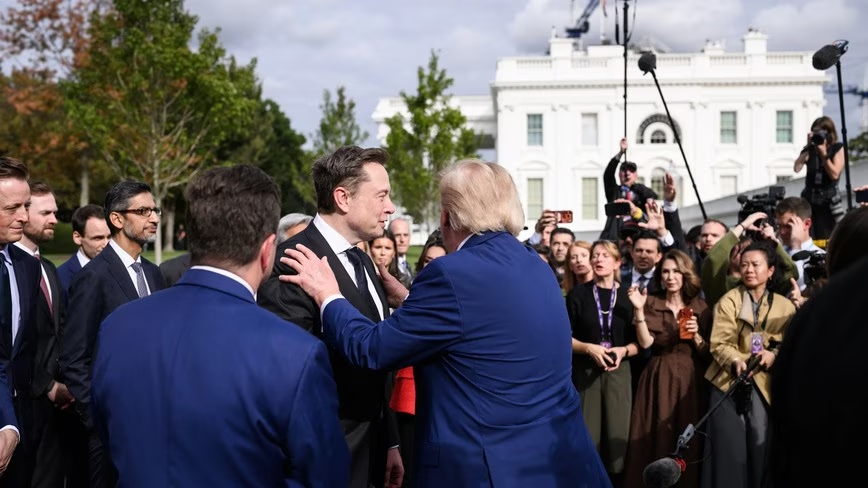
Elon Musk skipped the launch entirely. He was at a White House China State Dinner featuring President Xi Jinping. Musk did appear in a pre-taped video, describing the Semi as "going to be, really, a driver's truck. It's like a sports car in truck form."
What Tesla actually showed
Not much in the way of numbers. There was no pricing, no delivery timeline, and no detailed spec sheet — the three things anyone trying to model the Semi's economics would want first. A handful of fleet managers, all men, were brought on stage and thanked for their orders.
📊 Market Data Snapshot
That's the whole disclosure. For a vehicle Tesla has framed as a step into commercial trucking, the absence of hard figures leaves the market working from a video clip and a round of applause.
Musk's other Thursday night
The timing isn't great. A production launch is normally a moment for the person most associated with the product to stand in front of it. Instead, Musk was at a state dinner in Washington, seated alongside Xi Jinping. It's a scheduling conflict on paper, but it also puts a spotlight on how stretched his attention is between Tesla, his other ventures, and politics.
For a company whose stock has long traded on its CEO's ability to sell a story, the no-show matters more than the company would probably like. Nobody at the event explained it.
The $20 trillion number hanging in the air
Musk has targeted a $20 trillion valuation for Tesla — nearly four times Nvidia's value. The Semi is one of the pieces supposed to justify that kind of math, since commercial trucking is a large addressable market that Tesla has barely touched.
But you can't value a truck program without a price per unit or a production rate. Thursday's event delivered neither. That leaves the bull case resting on Musk's stated ambition and the fact that the line is now running, rather than on anything a buyer or an analyst can check.
The execution question
Scaling beyond passenger EVs is the real test here. Tesla has promised the Semi for years; the concept was shown in 2017 and volume production has slipped repeatedly since. Starting the line is a milestone, but a milestone isn't a delivery schedule.
The next concrete thing to watch is whether Tesla publishes pricing, specs, or a production rate in the coming weeks — or whether fleet customers start confirming deliveries on their own. Until one of those happens, the Semi is a truck with a launch date and not much else.