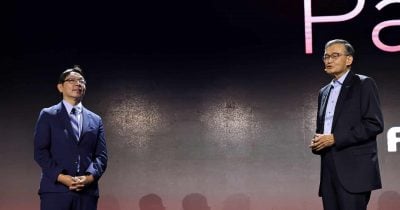
TSMC chief executive C.C. Wei declared that Taiwan's stranglehold on artificial-intelligence chip production is virtually unbreakable, a blunt assessment that highlights the island's central role in global tech infrastructure and hints at a lasting dependency for the rest of the world. Speaking to reporters, Wei argued that the combination of advanced manufacturing know-how, decades of investment, and a dense supplier network makes Taiwan nearly irreplicable for the most cutting-edge AI chips.
Why Wei made the statement
Wei's remarks came amid growing geopolitical anxiety over Taiwan's dominance in semiconductor fabrication, especially for chips used in AI training and inference. TSMC alone produces more than 90% of the world's most advanced processors — those built on 7-nanometer and smaller nodes — and is the sole manufacturer of chips for companies like Nvidia and AMD. Wei didn't name specific competitors, but his point was clear: even with billions in subsidies, no other country has yet come close to matching Taiwan's cluster of skills, equipment suppliers, and experienced engineers.
The CEO stressed that the barriers aren't just about building a factory. You need a whole ecosystem — chemical suppliers, wafer makers, specialized tool vendors — all within a short radius. Taiwan spent decades cultivating that ecosystem, and Wei questioned whether any rival could replicate it in the foreseeable future.
Global dependency risks
Wei's comment carries obvious implications for countries racing to secure their own chip supply. The United States, through the CHIPS Act, and the European Union, via its European Chips Act, are pouring public money into domestic fabrication plants. But Wei essentially argued that those efforts will take years to yield real results — and may never fully wean the world off Taiwanese silicon.
His warning about “prolonged dependency” resonated with analysts who have long flagged the vulnerability of a single point of failure in the AI supply chain. If tensions in the Taiwan Strait escalate, Wei suggested, the global AI boom could grind to a halt. He didn't elaborate on contingency plans, but the message was stark: no backup exists yet.
For chip designers and tech giants, Wei's statement reinforces the current reality: they have little choice but to keep placing orders with TSMC. Competitors like Samsung and Intel have struggled to match TSMC's yield rates and power efficiency on advanced nodes. Any shift would require years of R&D and billions in capital — with no guarantee of success.
Wei didn't address whether TSMC plans to expand capacity beyond Taiwan, though the company has announced new fabs in Arizona and Japan. Those projects, however, are still ramping up and won't produce cutting-edge chips for AI until at least 2025 or later. Until then, the island's dominance remains unchallenged.
The comment leaves open a central question: how long will the rest of the world accept this reliance, and what happens if political pressure forces a change? No one — not even Wei — offered a timeline.