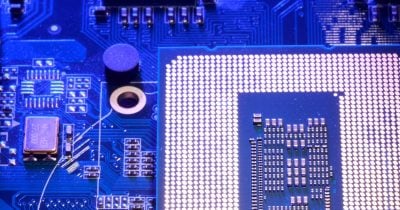
Taiwan Semiconductor Manufacturing Company is in a strong position to capture more business as the appetite for artificial intelligence chips keeps climbing. The company’s dominance in advanced chip production — particularly the cutting-edge processes needed for AI workloads — puts it at the center of a market that shows no signs of slowing.
Dominance in advanced production
TSMC has long held the lead in manufacturing the most complex semiconductors. Its ability to produce chips on smaller nodes, such as 3-nanometer and 5-nanometer, makes it the go-to foundry for companies designing AI accelerators. The same technology that powers today’s largest data-center processors is built on TSMC’s lines. Rivals have struggled to match the yield and performance TSMC delivers, leaving the Taiwanese firm with an effective monopoly on the highest-end AI silicon.
That edge matters more now than ever. Every major AI model — from large language models to recommendation engines — requires chips that pack more transistors, run faster, and consume less power. TSMC’s processes are the only ones that can hit those marks at scale.
Why demand keeps rising
The surge in AI chip demand isn’t a short-term blip. Cloud providers, carmakers, and even smartphone makers are integrating AI features that require dedicated hardware. Graphics-processing units from firms like NVIDIA rely on TSMC’s factories. So do custom chips developed by Amazon, Google, and Microsoft for their own data centers. Each new AI application — whether it’s real-time translation, autonomous driving, or generative search — drives orders for more advanced silicon.
TSMC’s own revenue figures have reflected this trend. The company reported a jump in sales tied to high-performance computing, a category that includes AI chips. That segment now accounts for a larger share of TSMC’s business than smartphones, which had been the traditional driver.
What comes next
The question for TSMC isn’t whether the demand will hold, but whether it can keep enough capacity ready. The company is building new fabs in Japan, Arizona, and Germany, though the timeline for those facilities to start churning out advanced chips stretches into 2025 and beyond. Meanwhile, competitors like Samsung and Intel are trying to close the gap, investing billions in their own foundry operations. So far, TSMC’s lead in the most advanced nodes remains intact, but the race is tightening.
Investors and industry watchers will be watching TSMC’s next earnings call for updates on capacity expansion and any signs that customers are diversifying their supply. For now, the company appears to be the biggest beneficiary of an AI boom that still has room to grow.