Unitree Robotics' Shanghai initial public offering drew 8,288 times more demand than the shares on offer, a frenzy that underscores investor appetite for humanoid robot makers in China. The company priced its listing at 150.8 yuan ($22.35) per share, giving it a valuation of $9 billion.
A record oversubscription
Retail investors submitted valid applications for 53.64 billion shares, but only 9.707 million were set aside for the online tranche. That works out to a winning rate of 0.0181% for retail investors — a tiny sliver of hope for those who got in.
The numbers are staggering even by Chinese IPO standards. Unitree didn't need to market the deal hard; the demand came to it. The company's robotics lineup, led by the G1 model for education and research, has made it a household name in the sector.
Why the frenzy
Embodied AI — artificial intelligence paired with a physical body — is a national priority in China. That policy push is translating into real money. Sector investment in embodied AI hit 47.09 billion yuan ($6.95 billion) in the second quarter, more than double the prior quarter and over six times the year-ago total.
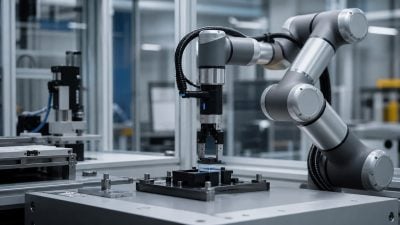
Investors are betting that humanoid robots will move from labs and showrooms into factories, warehouses, and homes. The IPO gives them a rare chance to own a piece of a leading player.
The competitive landscape
Unitree isn't the biggest player in the market. AgiBot shipped roughly 8,400 humanoid robots in the first half of 2026, holding a 44% global share. Unitree shipped about 5,900 units, a 31% share, despite growing 170% year over year.
AgiBot's growth came from a diverse range of robot lines, while Unitree leans heavily on the G1 for education and research. AgiBot hasn't disclosed its financials. Unitree posted 1.7 billion yuan in revenue and about 591 million yuan in adjusted net profit last year.
Other players are also heading to the public markets. X Square Robot, Galbot, and EngineAI have filed confidentially for Hong Kong listings. China now has more than 100 humanoid robot firms.
Chinese manufacturers supplied over 97% of all humanoid robots shipped globally in the first half of the year. That dominance has drawn a response from Washington, which has imposed import restrictions on cheap Chinese humanoids. Meanwhile, US chip export controls have had an odd side effect: they helped CXMT surge 466% on its Shanghai debut, as investors bet on domestic chipmakers.
The real question hanging over the sector is whether shipment volume translates into working robots. Many of these machines are still being tested, not deployed at scale. Unitree's IPO gives it cash to push further, but the market's enthusiasm may be running ahead of the hardware's reliability.