Washington — The US midterm election is shaping up as a new threat to the AI infrastructure trade. Growing opposition to AI data centers is spilling into federal politics, and investors are starting to factor in a future where building the backbone of the AI boom gets harder, slower, and more expensive.
The fight over data center siting
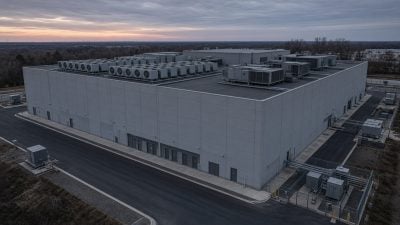
AI data centers are not like other industrial projects. They demand huge amounts of electricity, water, and land, and they run around the clock. In many parts of the country, that footprint has turned into a source of local tension. Neighbors complain about noise, traffic, and the strain on the power grid. Environmental groups point to emissions and water use. The result has been a growing patchwork of delays, denials, and lawsuits over proposed sites.
That resistance is no longer just a local issue. It has become a political one, and it's reaching Washington.
What a shift in Congress could mean
Control of Congress after the midterms could change the game for the AI industry. A more skeptical majority could push for new oversight on how data centers are approved, where they can be built, and what they pay for power. Some of that would be framed around environmental and land-use concerns. Some of it would be about national security and who gets to build the country's AI infrastructure.
Right now, AI infrastructure investment is booming, and a lot of that money is going into data centers. But political risk is a strange thing. It doesn't show up in a balance sheet until it does. A single vote in a local board, a single federal bill, can stall a project for years.
Why investors are watching
Investors have been slow to price in political risk in the AI trade. That's changing. If the midterms produce a Congress that is openly hostile to new data centers, the growth projections that underpin a lot of AI investments start to look shaky.
It's not just about the big cloud providers. A whole ecosystem depends on data centers being built at a certain pace. The suppliers, the power companies, the construction firms, the landlords — all of them are tied to that growth. If political headwinds slow the buildout, the ripple effects would be felt across the market.
The question is how much of that risk is already priced in. Some investors are starting to ask, and some are starting to hedge. But the truth is, nobody knows yet how far the opposition will go.
What's at stake for AI growth
The AI industry has grown by assuming that infrastructure will keep expanding to meet demand. That assumption is now under question. Every time a data center gets delayed or cancelled, it forces companies to rethink their plans. And when that happens at scale, it touches everything from training costs to the pace of product launches.
The midterms are the first real test of whether the anti-data-center movement can translate local anger into federal policy. The results will set the tone for the next two years. For now, the AI infrastructure trade is holding its breath, hoping that politics doesn't become the next big obstacle to the boom.