The US government has privately warned Dutch semiconductor equipment maker ASML about a suspected transfer of extreme ultraviolet (EUV) lithography machines to China. The warning, delivered in recent weeks, underscores the intensifying technological rivalry between Washington and Beijing — a conflict that threatens to reshape global chip supply chains.
Warning to ASML
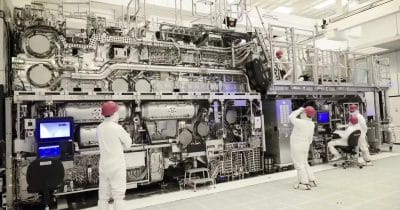
ASML is the world's sole supplier of EUV lithography machines, which are essential for producing the most advanced microchips. The US government's concern centers on alleged shipments that could give China access to this cutting-edge technology. Neither the White House nor ASML has publicly detailed the specific transfers or the evidence behind the warning.
The company, based in Veldhoven, Netherlands, operates under strict export controls that already ban the sale of EUV systems to Chinese entities. Yet the warning suggests Washington believes those controls may have been circumvented or are at risk of being violated.
Escalating Semiconductor Cold War
The warning fits a broader pattern of US efforts to contain China's semiconductor ambitions. Over the past three years, the Biden administration has tightened export rules, added Chinese companies to trade blacklists, and pushed allies like the Netherlands and Japan to adopt similar restrictions.
EUV lithography is the crown jewel of chip manufacturing. Without these machines, China cannot produce processors at 7-nanometer or smaller nodes — the kind used in smartphones, AI accelerators, and advanced military hardware. Losing that edge is something Washington is determined to prevent.
But the strategy is risky. China is the world's largest buyer of semiconductors, and any disruption to supply chains could hurt companies like ASML, which counts Chinese customers as a significant source of revenue for its older deep-ultraviolet (DUV) systems.
What's at Stake for Global Supply Chains
A full-blown US-China tech decoupling could force chipmakers to rebuild supply lines, slowing production and raising costs. ASML alone holds a near-monopoly on the equipment needed for the most advanced chips. If Washington forces ASML to halt even DUV machine servicing in China, the impact would ripple across industries from auto to data centers.
The Dutch government, which licenses ASML's exports, faces its own dilemma. It has historically balanced trade ties with China against alliance obligations with the US. The US warning now puts pressure on Prime Minister Dick Schoof's cabinet to tighten enforcement — or face diplomatic consequences.
ASML has not commented on the specific warning. The company's CEO, Christophe Fouquet, has previously described export controls as a matter of national security that the company complies with. But he has also warned that restricting access to non-EUV technology could accelerate China's push for self-sufficiency.
What remains unclear is whether the US warning will lead to formal sanctions, a denial of export licenses, or a demand that ASML verify past shipments. For now, the semiconductor cold war shows no signs of thawing.