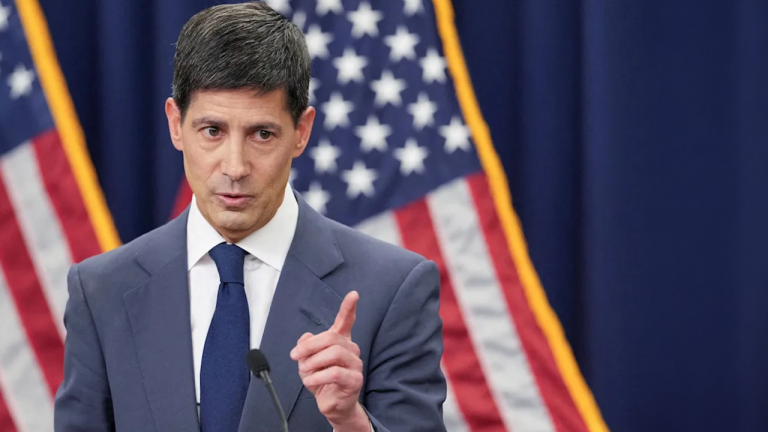
The Federal Reserve is heading into its next policy meeting with mixed signals from financial markets and political pressure from the White House. Prediction markets now show a majority probability that the central bank will hold interest rates steady, but Citadel Securities is betting on a hike. The divergence comes as President Trump publicly pressures the Fed and Chair Kevin Warsh prepares for his second rate decision since taking the helm.
Prediction markets vs. Wall Street
Data from prediction platforms indicates that traders see a greater than 50% chance the Fed leaves rates unchanged. That view contrasts with the forecast from Citadel Securities, one of the world's largest market makers, which expects a rate increase. The split suggests unusual uncertainty about the central bank's next move.
Citadel's call is notable because it comes from a firm that operates at the center of U.S. Treasury and interest-rate derivatives trading. Its prediction carries weight among institutional investors. But prediction markets, which aggregate bets from a broader pool of participants, tell a different story.
Trump's pressure campaign
President Trump has been applying pressure on the Federal Reserve regarding its interest rate decisions. He has publicly called for lower rates to stimulate the economy, a stance that puts him at odds with the Fed's independence. The president's comments have added a layer of political tension to the upcoming decision.
Trump's influence is indirect — he cannot order the Fed to change rates — but his remarks often move markets and shape expectations. The central bank has historically resisted such pressure, but the current environment is unusual.
Traders hedge their bets
In the federal funds futures market, activity shows a gradual shift in positioning. A growing number of participants are buying protection against a possible rate move, indicating that some traders are preparing for a surprise. The hedging suggests that while the consensus leans toward a hold, the risk of a hike is not being ignored.
This cautious behavior reflects the uncertainty surrounding the decision. The Fed's own communications have been mixed, with some officials hinting at patience and others warning about inflation.
Warsh's second decision
Kevin Warsh, who became Fed Chair earlier this year, is now approaching his second policy decision. His first meeting resulted in a hold, but the economic landscape has shifted since then. Warsh faces the challenge of balancing the president's demands with the Fed's dual mandate of price stability and maximum employment.
The decision is expected at the conclusion of the Fed's next meeting. Until then, markets will continue to parse every data point and every word from Fed officials.