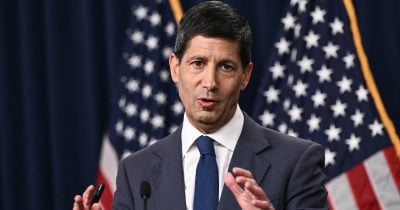
Austan Goolsbee, the economist, warned that weak productivity data could undermine expectations of AI-driven growth, potentially triggering inflationary pressures and forcing shifts in monetary policy. His remarks, delivered in a recent address, cast doubt on the assumption that artificial intelligence will quickly translate into broad economic gains.
The Productivity Problem
Goolsbee pointed to recent productivity figures that have come in below forecasts. If that trend continues, he argued, the efficiency gains that many investors and businesses are banking on from AI may not materialize as quickly or as strongly as hoped. The gap between hype and reality, he suggested, could be wider than current market pricing implies.
Productivity growth is the engine that allows an economy to expand without stoking inflation. When workers and machines produce more per hour, costs stay contained and wages can rise without pushing up prices. But if AI investments fail to deliver measurable output gains, that engine sputters.
Inflationary Pressures Ahead
Weak productivity data, Goolsbee warned, could feed directly into inflation. If companies spend heavily on AI systems but don't see a corresponding boost in output, they'll face higher unit costs. Those costs tend to get passed along to consumers, pushing prices up.
That scenario would put central banks in a tough spot. They'd have to decide whether to tolerate higher inflation or tighten policy to cool demand. Either choice carries risks. Tightening too soon could choke off the very investment that might eventually lift productivity. Waiting too long could let inflation become entrenched.
Policy Shifts on the Horizon
Goolsbee's warning suggests that the current policy path may need to change if productivity doesn't improve. Investors have priced in a series of interest rate cuts over the next year, based on the assumption that inflation will keep falling. But if productivity disappoints, those cuts could be delayed or reversed.
The economist didn't offer a specific forecast, but he made clear that the stakes are high. A productivity shortfall would not only affect growth expectations but also force a reassessment of how much slack the economy actually has. That reassessment, he implied, could come sooner rather than later.
What to Watch
The next few months of productivity data will be crucial. If numbers pick up, the AI growth story gains credibility. If they don't, expect markets to start questioning the valuations of tech companies and the broader economic outlook.
Goolsbee's warning serves as a reminder that technological promise doesn't automatically translate into economic reality. The data will tell the story, and the next release is due in early March.