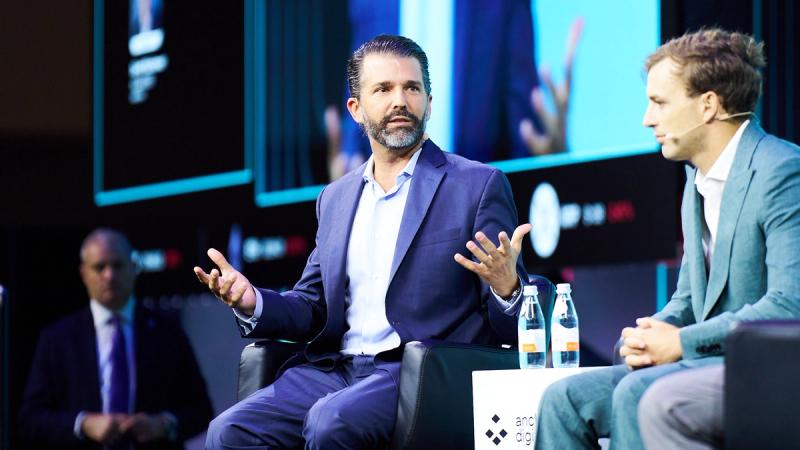
Moonshot released an upgraded AI model that the company is positioning against top-tier US systems, according to a Bloomberg report. The news aired on Bloomberg's The China Show, the segment hosted by Yvonne Man and David Ingles that tracks China's economy and technology trends. It's a notable data point in the China-versus-US AI race — and, for crypto traders, almost entirely a non-event.
What Bloomberg actually reported
The segment framed Moonshot's release as a competitive step against leading American models. That's the extent of what was disclosed. No model name, no version number, no benchmark scores, no pricing. Those omissions matter: without published evals, the claim that the model competes with top-tier US systems is a positioning statement, not a verified result.
📊 Market Data Snapshot
The source matters too. The China Show is a generalist business program, not a tech or crypto outlet. Moonshot's release landed inside a broader China-tech competitiveness package rather than as a standalone product announcement. Crypto media will likely amplify it as a primary catalyst anyway. It isn't one.
Why crypto isn't moving
There's no token, protocol, or capital flow attached to Moonshot's model. Bitcoin is trading near $80,080 with thin volume and neutral sentiment, and the Fear & Greed index sits at 50. In that regime, a Bloomberg TV hit about a Chinese AI lab doesn't move the tape.
The only transmission channel is narrative. AI-adjacent crypto tokens — Render, Fetch, Bittensor — have traded for months as proxies for US AI dominance. Continued Chinese progress chips at that story. But with Bitcoin dominance elevated, alt liquidity is thin, and headline-driven pumps in those names have been sellable all year. If the segment gets recycled across cycles, expect a short sympathy wiggle that fades within a session rather than a sustained bid.
The omission that undercuts the headline
The absence of benchmarks is the most important detail in the report. A frontier breakthrough would come with eval scores. This didn't. That suggests an incremental upgrade or a rebrand rather than a step-change — and it means any market reaction is sentiment-driven and prone to reversal.
There's a second-order read that most coverage will skip. Chinese frontier labs — Moonshot, DeepSeek, Qwen — are scaling on centralized infrastructure without touching decentralized compute networks like Render or Akash. If that pattern holds, the long-term demand thesis for AI-crypto tokens weakens quietly. It won't show up in price until the narrative cracks, but it's a slow negative for the sector.
The longer game
Over one to six months, the strategic picture is a commoditizing Chinese AI stack. That's a tailwind for open-source and decentralized AI infrastructure and a headwind for tokens whose only thesis is a US AI monopoly. Position for a multi-model world, not a single-winner one.
Near term, Bitcoin is likely to chop between roughly $78,500 and $82,000 on low volume while this headline gets ignored. The thing to watch is whether a follow-up report lands with concrete benchmarks or open-weight availability. Without that, Moonshot's release stays a sentiment story — and sentiment stories in a BTC-led, low-volume market don't last past the close.