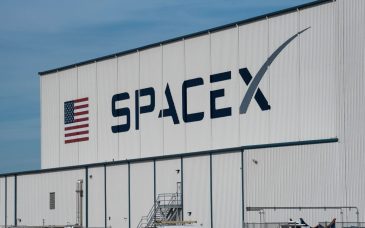
SpaceX is set to go public on June 12 at a valuation of $1.75 trillion, but the S&P 500 won't take it. S&P Dow Jones Indices confirmed this week that eligibility rules require profitability in the most recent quarter and the prior four combined — and SpaceX reported a $4.94 billion net loss for 2025. No exceptions for market cap, no waivers.
Why the S&P 500 said no
The index's profitability rule is straightforward: a company must post positive net income over the trailing four quarters and in the latest quarter. SpaceX's S-1 filing shows heavy spending on Starship development and Starlink expansion drove a deep loss last year. That bars entry regardless of its trillion-dollar valuation. S&P Dow Jones made clear no carve-outs would be granted for size alone.
Nasdaq 100 takes the opposite approach
While the S&P 500 shuts the door, the Nasdaq 100 is fast-tracking SpaceX's inclusion. That means passive funds tracking the tech-heavy index will have to buy a significant chunk of shares right after the IPO. The move creates a guaranteed buyer base, but for index funds it means shuffling capital away from other holdings — including crypto-related equities — to make room.
Inside the Bitcoin stash
SpaceX's S-1 discloses 18,712 Bitcoin held at a $661 million cost basis. That's indirect crypto exposure for every SpaceX stockholder, and the position is large enough to matter if prices swing. The company hasn't said whether it plans to hold or reduce the stash post-IPO, but the disclosure alone gives the stock a crypto angle that most traditional index funds don't typically contend with.
The bigger liquidity drain
SpaceX isn't alone. Combined IPOs from SpaceX, OpenAI, and Anthropic are projected to raise over $240 billion by year-end. That kind of capital demand could siphon liquidity from tech, AI, and even crypto markets as institutional investors rebalance portfolios. FTSE Russell has already made SpaceX eligible for its global equity indexes under fast-entry rules, and S&P will modify its Total Market Index and Dow Jones US Total Stock Market Index to include the company within 12 months — but not the flagship S&P 500.
The clock is now on SpaceX to show a profitable quarter if it ever wants that S&P 500 badge. For now, the Nasdaq 100 and a Bitcoin treasury are what retail and institutional buyers will get.