BlackRock published a research paper this month arguing that artificial intelligence and crypto share the same end user: machines. The paper, titled 'The Machine-Native Economy,' was co-written by Robert Mitchnick, the firm's head of digital assets. Its central claim is short enough to fit in a sentence: 'AI is machine-native intelligence and crypto is machine-native money.'
The argument is less about what people do with bitcoin and more about what software does when nobody's watching. BlackRock says the plumbing most payments run on today simply isn't shaped for that.
Why cards and wires don't fit software
The paper lays out three problems with existing rails. Card networks and bank transfers assume a human signs up, handles the fees, and waits. For an AI agent paying a fraction of a cent for a piece of data, none of that works. Fees eat the transaction. Settlement can take a day or more. And the sign-up step is a wall software can't climb on its own.
Stablecoins, in BlackRock's telling, already clear that bar at scale. The firm says stablecoins moved more than $11 trillion in 2025, a figure that puts them in the same company as Visa and Mastercard. That's the volume argument. The rest of the paper is about where the demand comes from next.
Compute as a commodity, settled on-chain
BlackRock floats the idea that AI computing power could eventually trade in standard contracts — the way oil does — with blockchains handling settlement. It's a speculative framing, and the paper treats it that way, but it lines up with where the money is going. The paper cites analyst estimates putting cloud revenue at Amazon, Microsoft and Google near $1.1 trillion by 2030.
The infrastructure for machine-to-machine payments is already being built, and not only by crypto natives. In August 2026, Stripe agreed to buy OpenRouter, which routes AI requests across more than 400 models. Stripe CEO Patrick Collison framed the logic plainly: 'Tokens are the central currency for companies building with AI.'
On the crypto side, Coinbase built x402, a tool that lets software pay a website instantly rather than through an account setup. Cardano joined x402 earlier this month. It's early, and the number of real transactions running through it is small.
The paper's own caveat
BlackRock doesn't oversell. The paper admits that payments by AI agents remain limited. It also cites simulations in which AI models chose stablecoins to spend and Bitcoin to save — simulations, not actual purchases. That distinction matters, because the gap between a model picking an asset in a test and a model holding one in production is the whole ballgame.
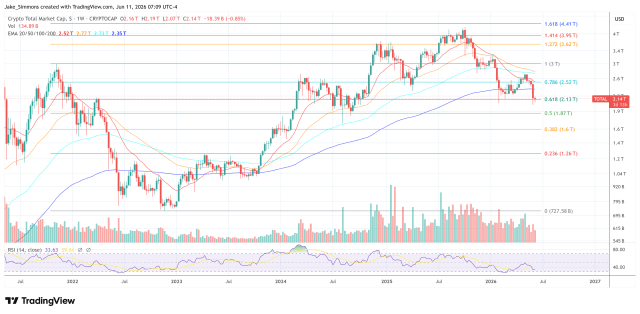
There's an awkward backdrop for BlackRock's digital assets arm. Its iShares Bitcoin Trust held $67 billion as of September 25, per iShares, but IBIT has lost about a third of its value this year. A research paper arguing that crypto is the native money of the next computing wave lands differently when the flagship fund is down that much.
The next thing to watch isn't another paper. It's whether x402-style rails post transaction counts that make the machine-payments thesis measurable, rather than theoretical. BlackRock hasn't said whether it plans to publish follow-up data on that.